Best Incentive Destinations in the US: A Strategic Evaluation
The selection of a destination for a corporate incentive program is frequently reduced to a binary choice between sun and snow. This reductionist approach ignores the complex psychological and logistical layers that define a truly transformative reward experience. In the professional sphere, an incentive trip is not merely a vacation; it is a high-stakes deployment of corporate culture, intended to reinforce specific behaviors and solidify the emotional contract between the high-achiever and the institution. When the choice of locale is misaligned with the demographic profile or the strategic goals of the organization, the capital expenditure often fails to generate the intended “long-tail” motivation.
As global travel costs continue to experience high volatility, the American domestic landscape has emerged as a primary focus for sophisticated incentive planners. The United States offers a unique “Vulnerability-to-Value” ratio, where the absence of international customs friction and currency fluctuations allows for a higher percentage of the budget to be diverted into “Perceptual Luxury” and exclusive programming. However, the sheer geographic breadth of the country presents its own set of challenges. One must account for regional seasonality, airlift accessibility from diverse hubs, and the “Novelty Threshold,” the point at which a familiar destination is elevated to an aspirational reward through curated, high-access experiences.
Strategic selection requires a move beyond the “Destination Marketing” gloss and toward a forensic analysis of “On-Site Delivery Capacity.” A city may possess world-class hotels but lack the “Privacy Infrastructure” required for a C-suite retreat, or it may have the infrastructure but lack the “Cultural Narrative” necessary to inspire a younger, experience-driven workforce. To identify the optimal location, leadership must evaluate destinations through a framework of “Total Attendee Immersion.” This article provides an exhaustive analysis of the American incentive landscape, moving beyond superficial rankings to explore the structural and psychological dynamics of the country’s most potent reward environments.
Understanding “best incentive destinations in the us”

To master the identification of the best incentive destinations in the US, one must first dismantle the “Top 10” fallacy. A destination that is “best” for a Silicon Valley sales team focused on adventure and rugged luxury is likely a “failure” for a Northeastern insurance firm’s legacy performers who prioritize comfort and historical prestige. High-level planning requires “Demographic Forensic Analysis,” understanding the average age, travel history, and lifestyle expectations of the qualifiers before the first RFP is issued.
Multi-perspective understanding involves balancing the “Access Lens” (how exclusive is the experience?) against the “Airlift Lens” (how difficult is it to get there?). A common oversimplification risk is choosing a destination based solely on the quality of a single resort. In the context of an incentive, the resort is the “Stage,” but the city or region is the “Set.” If the “Set” lacks the cultural or logistical depth to support four days of unique programming, the program will feel repetitive. When leadership asks about the best incentive destinations in the US, the answer must account for “Programmatic Resilience”—the destination’s ability to offer varied experiences that cater to diverse personality types within a single winning group.
Furthermore, there is a pervasive “Novelty Gap” in domestic travel. Many high performers have already visited major hubs like Las Vegas or Orlando for leisure. To transform a common destination into an incentive-grade reward, the program must offer “Insider Access” that is unattainable to the retail traveler. This might include a private dinner on a historic stage, a closed-door tour of a private collection, or a buyout of a landmark space. The “best” destination is ultimately the one that allows the organization to demonstrate its own “Power of Access” to its employees.
Deep Contextual Background: The Evolution of the Reward Landscape
The lineage of the American incentive trip is rooted in the “Grand Hotel” era of the early 20th century. Destinations like White Sulphur Springs, West Virginia (The Greenbrier), or Palm Beach, Florida (The Breakers) served as the original bastions of corporate social capital. In this era, the risk was primarily “Exclusivity.” The incentive was to enter a social circle that was otherwise closed. The relationship was paternalistic, and the reward was a demonstration of the company’s high status.
The 1980s and 90s introduced the “Spectacle Era,” dominated by the rise of “Mega-Resorts” in Las Vegas and the expansion of the theme-park economy in Orlando. This was the era of “Volume-Based Luxury,” where the sheer scale of the production was intended to signify the value of the achievement. This period established the “Linear Budget” model, the belief that more spending on physical production equaled more motivation. However, this model eventually plateaued as attendees began to experience “Spectacle Fatigue.”
Today, we occupy the “Era of Hyper-Localism and Authenticity.” The modern high-performer values “Cultural Currency” over “Physical Opulence.” They want to see the “Unseen” parts of a destination, eat at the “Hard-to-Book” local chef’s table, and participate in activities that feel grounded in the local ecosystem. We have moved from Social Exclusion (1920s) to Physical Spectacle (1990s) to Cultural Immersion (2020s). Managing a domestic program today requires navigating the “Aspirations of Authenticity.”
Conceptual Frameworks and Mental Models
To select a destination with architectural rigor, leadership should apply frameworks that transcend simple aesthetic preferences.
The “Friction-to-Flavor” Ratio
This mental model evaluates a destination by weighing the difficulty of travel (Friction) against the uniqueness of the reward (Flavor). A destination like Lanai, Hawaii, has extremely high friction (multiple flights, long travel days) but offers unprecedented “Flavor.” Conversely, Scottsdale, Arizona, has low friction but can have lower “Flavor” if not programmed creatively. The goal is to ensure the “Flavor” justifies the “Friction” for your specific employee base.
The “Status Delta” Framework
This model asks: “How much does this trip raise the winner’s social standing among their peers?” If the destination is one that the winners could easily afford or organize themselves, the “Status Delta” is low. To create a high delta, the destination must either be naturally exclusive or the programming within the destination must be “Unbuyable” by the general public.
The “Airlift Elasticity” Model
Incentive budgets are often consumed by travel days. This framework maps the “Total Time Out of Office” against the “Actual Time in Destination.” For a three-night program, a destination with more than six hours of travel time (including layovers) creates a “Fatigue Deficit” that undermines the first 24 hours of the program. “Airlift Elasticity” dictates that the shorter the program, the closer the destination must be to the primary employee hub.
Key Categories of US Incentive Hubs and Strategic Trade-offs
The American landscape can be categorized into distinct “Experience Clusters,” each with its own set of fiscal and psychological trade-offs.
| Cluster | Primary Appeal | Main Trade-off | Ideal Demographic |
| Southwest Desert (Scottsdale, Sedona) | Reliability; Spa/Golf | High heat; “Corporate” feel | Legacy performers; Mixed ages |
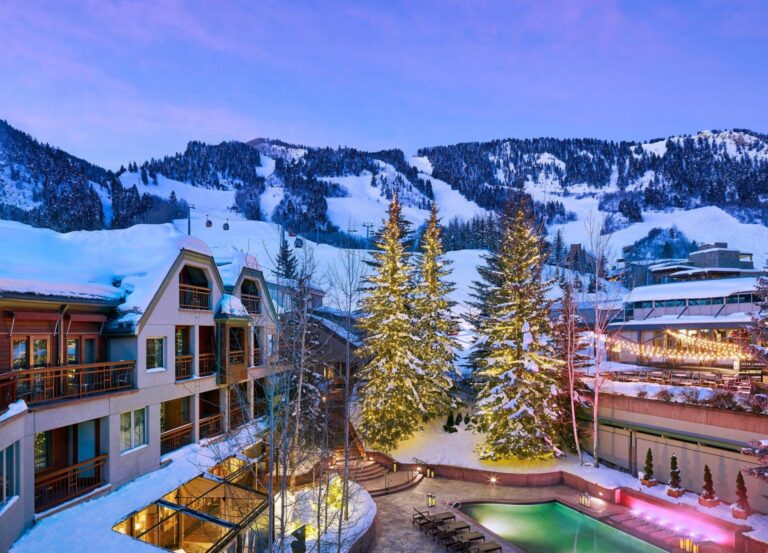
| Mountain West (Aspen, Jackson Hole) | Rugged Luxury; Scenery | High cost; Altitude fatigue | High-energy; High-net-worth |
| Coastal Enclaves (Monterey, Sea Island) | Tranquility; Heritage | Limited nightlife; Weather risk | Executive retreats; High-tenure |
| Metropolitan Hubs (New York, Nashville) | Culture; Culinary; Access | Logistics/Transit; Noise | Younger cohorts; Urbanites |
| Tropical Domestic (Miami, Maui, PR) | “International” feel | Long airlift; High seasonality | Sales teams; “Sun and Fun” seekers |
| Niche/Emerging (Charleston, Savannah) | Authenticity; Storytelling | Capacity limits; Boutique focus | Smaller groups; Diverse interests |
Decision Logic: The “Critical Mass” Check
Before committing to a destination, one must perform a “Critical Mass” check on the hotel stock. Does the city have at least three hotels of comparable quality? If not, the organization lacks “Negotiating Leverage” and “Disaster Recovery” options if the primary venue suffers an operational failure.
Detailed Real-World Scenarios
The “Legacy” Shift
A long-standing firm has taken its top 100 people to Las Vegas for ten years. Participation is high, but “Excitement Scores” are declining.
-
The Strategic Shift: They pivot to Charleston, South Carolina.
-
The Logic: They trade “Scale” for “Storytelling.” By utilizing historic mansions for dinners and private tours of Lowcountry islands, they create a sense of “New Discovery” for seasoned travelers.
-
Outcome: The “Status Delta” increases because the trip feels more sophisticated and curated.
The “Accessibility” Crisis
A Northeast-based company wants to go to Hawaii for a 3-night “President’s Club.”
-
The Risk: Attendees spend 22 hours in transit for 72 hours of on-site time.
-
The Failure: By day two, the group is jet-lagged and disengaged from the business sessions.
-
The Avoidance Strategy: Pivot to Puerto Rico (a domestic territory). It offers the “Tropical Escapism” without the “Time Zone Trauma,” allowing for immediate engagement.
Planning, Cost, and Resource Dynamics
The economic analysis of the best incentive destinations in the US must account for “Total Cost of Experience” (TCE), not just the room rate.
Direct vs. Indirect Costs
-
Direct: Room rates, food and beverage, group activities, airfare.
-
Indirect: Ground transportation (expensive in cities like NYC), AV costs (higher in unionized hotels), and “Service Gratuities” which vary significantly by region.
-
The “Resort Fee” Trap: Many domestic luxury properties add $50–$100 per night in mandatory fees. In a large group, this can be a $20,000 “Silent Overrun.”
Range-Based Resource Allocation Table
| Destination Tier | Est. Cost per Person (4 days) | Key Value Driver | Best For |
| Classic Hub (Vegas/Orlando) | $2,500 – $4,000 | Scale/Ease | 500+ attendees |
| Luxury Coastal (Newport/Malibu) | $4,500 – $7,000 | Scenery/Exclusivity | 50–150 attendees |
| Premier Mountain (Vail/Jackson) | $6,000 – $10,000+ | Status/Adventure | Top 25 (Diamond Club) |
Tools, Strategies, and Support Systems
Successful domestic site selection requires a “Stack” of technical and professional resources.
-
Cvent/Lanyon Platforms: Using “Sourcing Engines” to run a competitive RFP process across multiple cities simultaneously.
-
DMC (Destination Management Company) Partnerships: Local experts who provide the “Boots on the Ground” for exclusive logistics. A program is only as good as its DMC.
-
Airlift Analysis Reports: Using software to calculate the “Average Travel Time” for a specific attendee list to three different potential cities.
-
Taxation Analysis: Understanding state-specific occupancy taxes and “Service Surcharges” which can fluctuate from 15% to 35% across the US.
-
Site Inspection Rituals: Never booking a destination without a “Stress-Test” visit where the planner walks the “Back of House” and tastes the specific group menu.
-
“Ghost-Pricing” Audits: Checking retail rates on consumer sites (Expedia) to ensure the group is actually receiving “Volume Value” from the hotel.
Risk Landscape: A Taxonomy of Compounding Failures
The domestic landscape is prone to “Invisible Risks” that can derail a program.
-
The “Labor Strike” Risk: Many major hub hotels (San Francisco, NYC, Chicago) are unionized. A strike during an incentive program can lead to zero service or “Picket Line” optics that destroy the reward sentiment.
-
The “Compression” Overrun: Booking a city during a major city-wide event (like South by Southwest in Austin or a Super Bowl). Room rates triple, and the group loses its “Sense of Importance” in the city.
-
The “Weather Gaps”: Relying on Florida in September (Hurricane risk) or the Mountains in April (Mud season). The “Savings” on the room rate are offset by the risk of total cancellation.
Governance, Maintenance, and Long-Term Adaptation
A successful incentive strategy is not a series of one-off events; it is a “Motivation Lifecycle.”
The “Destinations Roadmap”
Strategic planners should maintain a 3-year “Roadmap” that rotates between “Experience Archetypes” (e.g., Year 1: Beach; Year 2: City; Year 3: Mountain). This prevents “Destination Fatigue” and creates anticipation among the workforce.
Adaptation Checklist:
-
Is the destination “Politically/Socially Neutral” for the diverse employee base?
-
Have we accounted for “Inflationary Drift” in F&B costs for this specific region?
-
Is there an “Exit Strategy” for the contract if the company’s financial performance shifts?
-
Have we mapped the “Attendee Travel History” to ensure we aren’t repeating a past locale?
Measurement, Tracking, and Evaluation
The ROI of an incentive destination is found in the “Re-engagement Score” post-trip.
-
Leading Indicator: “Program Anticipation Rate” Surveys sent 6 months out asking: “How motivated are you to win the trip to [Destination]?”
-
Lagging Indicator: “Retention of Qualifiers” Are the people who won the trip still with the company 12 months later?
-
Qualitative Signal: “Narrative Persistence” Do employees still talk about the “Napa Dinner” or the “Aspen Ski Day” three years later?
Documentation Examples
-
The “Site Inspection Scorecard”: A standard rubric to evaluate hotels on “Service Agility” and “Room Consistency.”
-
The “Post-Event Impact Report”: A forensic look at the total spend vs. the employee satisfaction scores.
Common Misconceptions
-
“Domestic is always cheaper than international.”
-
Correction: A high-end program in Aspen or NYC can easily exceed the cost of a luxury program in Mexico or the Caribbean due to labor and service costs in the US.
-
-
“Las Vegas is only for gambling.”
-
Correction: Modern Vegas is a “Culinary and Entertainment Capital.” The “best” programs there focus on the “Off-Strip” luxury and private culinary experiences.
-
-
“Our people only want a beach.”
-
Correction: Research shows that “High-Tenure” employees increasingly value “Cultural Enrichment” and “Authenticity” over simple “Pool Time.”
-
-
“Boutique hotels are better for incentives.”
-
Correction: They are better for “Vibe,” but often lack the “Event Staffing” and “Back-up Infrastructure” (e.g., secondary kitchens) required for a high-stakes corporate group.
-
Conclusion
The pursuit of the best incentive destinations in the US is ultimately a journey into the “Psychology of the Reward.” It requires the organization to move beyond the aesthetic and into the operational, ensuring that every geographic choice is a deliberate act of culture-building. Whether it is the quiet exclusivity of a coastal enclave or the high-octane energy of a metropolitan hub, the destination must serve as a “Force Multiplier” for the employee’s achievement. By applying rigorous frameworks, accounting for total resource dynamics, and prioritizing “Insider Access,” a firm can ensure that its domestic programs are not just a line-item expense, but a strategic asset that fuels the next cycle of excellence.