Luxury Retreat Locations USA: A Strategic Evaluation of Seclusion
The concept of the “retreat” in the American context has undergone a profound transformation, moving away from the restorative spas of the Gilded Age toward a highly fragmented landscape of “Purpose-Driven Luxury.” Today, the selection of a high-end destination is rarely about a singular amenity; it is an exercise in “Environmental Curation.” For the modern high-performer or corporate leadership team, a retreat serves as a temporary suspension of the everyday, a controlled environment designed to catalyze specific psychological or strategic outcomes. Whether the goal is cognitive recovery, team realignment, or discreet networking, the physical location acts as a silent architect of the experience.
Within the United States, the geographical diversity allows for a “Climatic Specialization” that international destinations often lack. One can transition from the high-desert silence of the Southwest to the dense, maritime isolation of the Pacific Northwest within a single travel day. However, this abundance creates a “Selection Paradox.” Without a rigorous framework to evaluate the infrastructure, service reliability, and “Atmospheric Density” of a location, planners often default to recognizable brand names that may not align with the actual mission of the gathering. A luxury retreat is only as effective as the friction it removes from the participant’s mental bandwidth.
As we move further into a period of “Intentional Travel,” the definition of luxury has shifted from opulence to “Exclusivity of Access.” This involves not just the physical privacy of a gated estate, but the “Intellectual Privacy” of a location that is off the mainstream circuit. The domestic landscape is currently seeing a surge in “Hyper-Niche” developments, properties that integrate so deeply with the local ecosystems that they become irreplaceable. To navigate these options, one must look past the marketing photography and analyze the structural integrity of the service models that underpin these world-class assets.
Understanding “luxury retreat locations usa”
To truly master the selection of luxury retreat locations in the USA, one must first acknowledge that “Luxury” is no longer a static descriptor of thread counts or culinary accolades. It is a dynamic measure of “Resource Recovery.” A common misunderstanding in both the corporate and private sectors is that a high price point guarantees a specific outcome. In reality, a location with world-class facilities but high “Ambient Noise”, both literal and metaphorical, can be a catastrophic failure for a group seeking deep focus or restorative silence. Multi-perspective understanding requires evaluating a site through the lenses of “Biological Impact” (sleep quality, air purity), “Cognitive Load” (ease of navigation, tech-seamlessness), and “Social Velocity” (the ability to oscillate between group engagement and individual solitude).
Oversimplification risks often manifest in the “Resort-centric View.” Planners frequently fall into the trap of thinking the hotel is the destination. For an elite retreat, the “Service Perimeter” must extend far beyond the lobby. The most effective luxury retreat locations usa are those that offer “Total Environmental Control.” This means the surrounding topography, the local climate, and even the regional political and social stability must all contribute to a sense of safety and removal. When leadership evaluates these sites, they must ask whether the location provides a “Sanctuary” or merely a “Hotel Room.”
Furthermore, there is a “Cultural Dissonance” risk. A ranch in Montana offers a very different “Emotional Registry” than a coastal villa in Rhode Island. If the participant demographic is culturally misaligned with the location, for example, bringing a high-energy, urban-focused tech team to a highly formal, traditional heritage property, the “Atmospheric Friction” will impede the retreat’s objectives. True proficiency in selection involves matching the “Vibe of the Venue” to the “Needs of the Mind.”
Deep Contextual Background: The Evolution of the American Sanctuary
The history of the American retreat is a story of “Escapism as a Service.” In the late 19th and early 20th centuries, the primary drivers were health and social standing. Locations like Saratoga Springs or the Adirondacks were sought out for their “Medicinal Air” and mineral waters. This was the era of Sanatorial Luxury, where the elite sought to escape the industrial grime of the cities to “take the cure.”
The mid-20th century transitioned into the Era of the Destination Resort. Following the expansion of commercial aviation, locations like Hawaii and the Florida Keys became accessible “Tropics” for the American executive. The focus shifted from health to “Leisure and Status.” This period saw the rise of the “All-Inclusive” mindset, where the resort became a self-contained world designed to distract rather than to restore.
Today, we have entered the Age of Integrative Seclusion. The modern luxury retreat is a hybrid of a high-performance lab and a traditional sanctuary. The participants are often looking for “Bio-Hacking” opportunities, “Deep Work” environments, or “Digital Detox” protocols. The US has seen the rise of “Purpose-Built” retreats that focus on specific cognitive or physical outcomes—such as sleep-focused resorts in the Southwest or “Mindfulness” enclaves in Northern California. We have moved from Physical Recovery (1900s) to Social Status (1960s) to Cognitive Optimization (2020s).
Conceptual Frameworks and Mental Models
Strategic selection requires a move toward “Systems Thinking” when evaluating a potential location.
The “Friction-to-Flow” Framework
This model assesses a location by the time it takes for a participant to reach a state of “Flow” or “Decompression.” A location with complex travel logistics (e.g., three flights and a boat) has high “Initial Friction.” To be successful, that location must offer a higher “Terminal Flow” (uninterrupted seclusion) than a more accessible site. If the friction of travel outweighs the depth of the experience, the retreat is a net-negative for the participant’s energy.
The “Atmospheric Density” Model
Atmospheric density refers to how “saturated” a location is with its theme. A ranch that still operates as a working agricultural entity has high “Authentic Density.” A ranch that is merely a hotel with cowboy-themed decor has low density. Participants at a high level are sensitive to “Theatrical Luxury”; they crave locations where the environment feels coherent and inevitable.
The “Cognitive Load” Reduction Loop
This framework suggests that the more “decisions” a participant has to make at a retreat—what to eat, where to go, how to use the shower—the less mental energy they have for the retreat’s actual purpose. Luxury is defined here as the “Removal of Choice.” A superior retreat location has an intuitive layout and a service model that anticipates needs before they are articulated, effectively “zeroing out” the participant’s logistical cognitive load.
Key Categories of High-End Retreat Hubs
The American geography provides several distinct “Seclusion Archetypes,” each with specific trade-offs.
| Archetype | Primary Focus | Main Trade-off | Ideal Scenario |
| High Desert (SW) | Silence; Recovery | Extreme climate; Dryness | Creative “Deep Work”; Wellness |
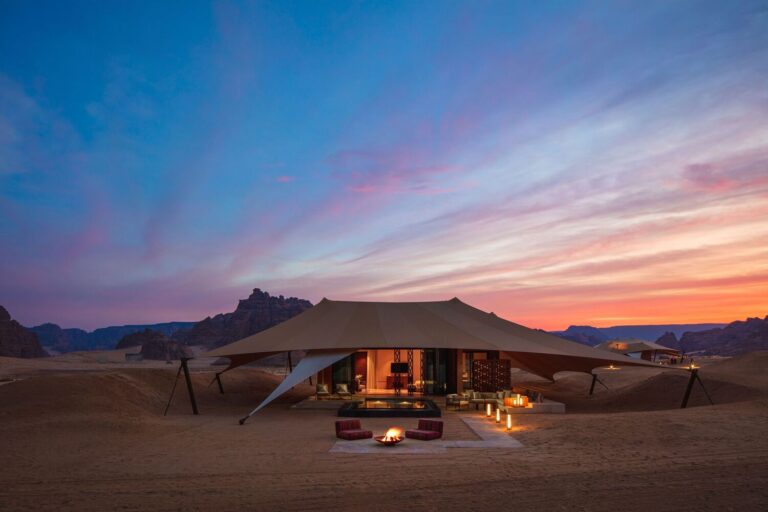
| Alpine Seclusion (West) | Vitality; Perspective | Altitude sickness risk; Cold | Leadership alignment; Strategy |
| Coastal Heritage (East) | Tradition; Calm | Seasonal weather; Formality | Board meetings; Client networking |
| Pacific Forest (NW) | Introspection; Mystery | Frequent rain; Limited sun | Innovation; Solo “Vision Quests” |
| Tropical Domestic (FL/HI) | Relaxation; Reward | Long travel; Commercialization | Incentive rewards; Morale boost |
| Remote Ranch (Mountain) | Authenticity; Bond | Logistical difficulty; Rustic | Team bonding; Vulnerability |
Decision Logic: The “Privacy-to-Access” Rubric
When choosing between categories, the planner must ask: “Is the goal to see and be seen, or to disappear?” A Metropolitan Luxury hotel in NYC offers high “Access” but low “Privacy.” A private estate in the San Juan Islands offers high “Privacy” but zero “Access” to outside entertainment. The decision should be driven by the group’s “Public Profile.” Higher-profile groups require “Inward-Facing” locations where the environment is the only audience.
Detailed Real-World Scenarios
The “Executive Burnout” Reset
A CEO of a major firm needs a five-day recovery period after a high-stakes merger.
-
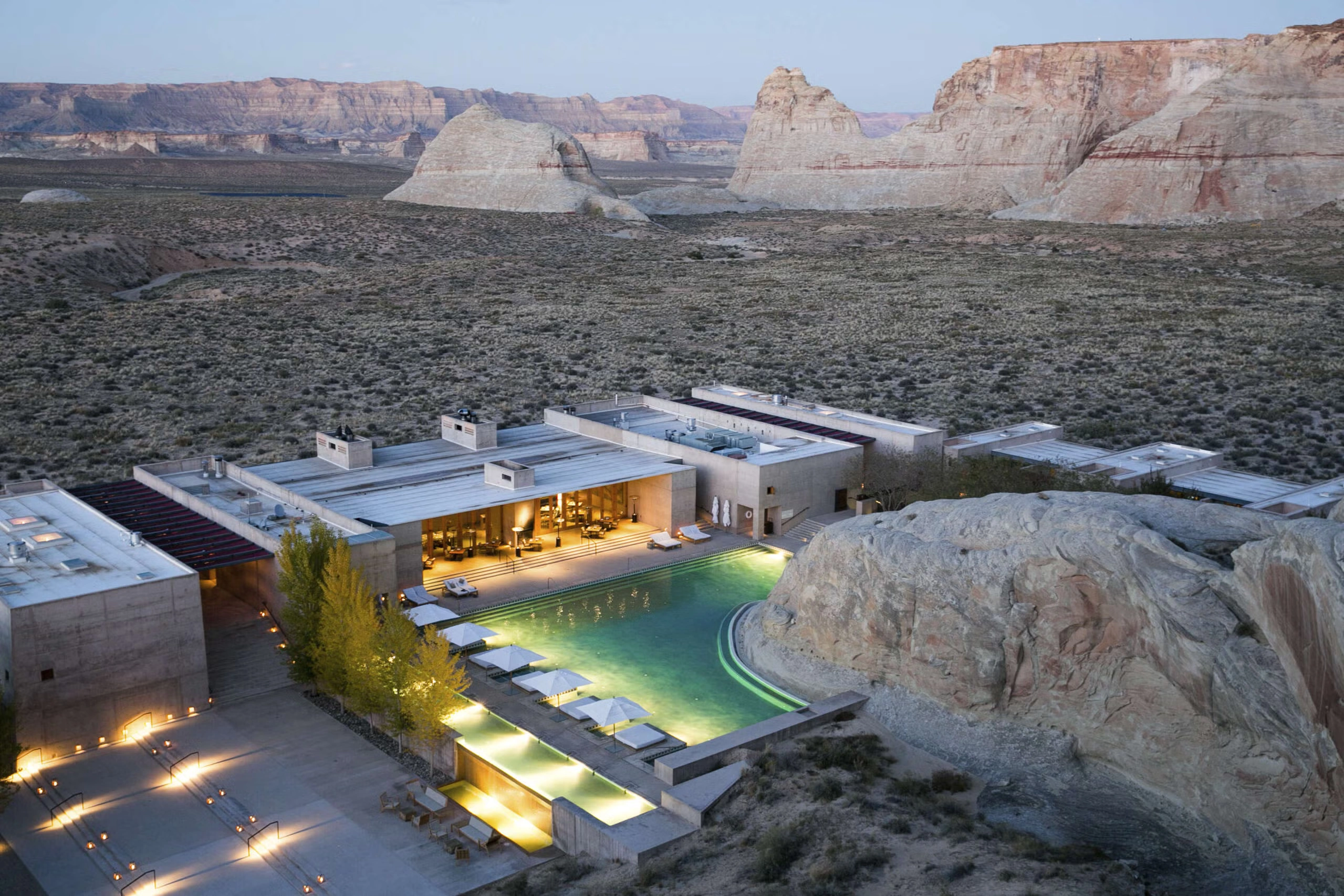
The Location: A desert retreat in Canyon Point, Utah.
-
The Logic: The “Extreme Minimalism” of the desert architecture combined with 24/7 bespoke medical and nutritional support provides the “Biological Reset” needed.
-
Failure Mode: If the resort is too close to a major city, the “Pull of the Office” remains too strong. The isolation of Southern Utah acts as a “Geographic Firewall.”
The “Strategic Divergence” Alignment
A board of directors is split on a new direction and needs a “Neutral Ground” for high-stakes negotiation.
-
The Location: A historic manor in Middleburg, Virginia.
-
The Logic: The “Gentle Landscape” and historical weight of the location foster a sense of “Civility and Long-term Thinking.”
-
Second-Order Effect: The presence of horses and outdoor activities allows for “Parallel Play”—where board members can bond without the pressure of direct eye contact across a boardroom table.
Planning, Cost, and Resource Dynamics
The true cost of a luxury retreat is found in the “Internal Labor” required to manage it.
Direct vs. Indirect Costs
-
Direct: Room rates (often $1,500 – $4,000+ per night), private aviation, curated F&B, speaker fees.
-
Indirect: The “Pre-Retreat Anxiety” of the attendees, the “Post-Retreat Re-entry” friction, and the significant hours spent by the EAs and event staff on “Customization.”
-
The “Staff-to-Guest” Ratio: At the highest level, a 3:1 ratio is standard. If the location cannot provide this, the “Invisible Labor” of managing the group falls back onto the organization’s internal team.
Estimated Resource Commitment Table
| Retreat Level | Total Daily Spend (per person) | Key Resource Drain | Success Metric |
| Boutique Luxury | $1,200 – $2,000 | Venue Management | Positive Sentiment |
| High Seclusion | $2,500 – $5,000 | Logistical Ops | Measurable Decompression |
| Ultra-Private/Buyout | $10,000+ | Content Curation | Strategic Transformation |
Tools, Strategies, and Support Systems
Executing a flawless retreat requires a “Stack” of technical and procedural assets.
-
Advance Logistics Reports: Using tools to track weather patterns, regional “Airlift Stability,” and localized supply chain risks (e.g., ensuring specific dietary needs can be met in a remote forest).
-
Acoustic & Light Surveys: At the highest level, planners should request data on “Ambient Decibels” and “Light Pollution” to ensure the site allows for optimal circadian rhythm regulation.
-
Privacy/NDA Protocols: Standardized legal frameworks for staff at the retreat location to ensure that sensitive strategic discussions remain private.
-
The “Dry-Run” Site Visit: A protocol where the planner stays at the property anonymously before the group arrives to “Stress-Test” the service recovery.
-
Biometric Tracking Integration: For wellness-focused retreats, providing attendees with wearables that sync with the resort’s kitchen and spa to personalize the recovery.
-
“Choice Architecture” Apps: Allowing attendees to pre-select everything from their pillow type to their “Morning Beverage” to eliminate on-site decision fatigue.
Risk Landscape: Taxonomy of Failure Modes
The “Compounding Risks” of a high-end retreat are often subtle and psychological.
-
The “Theatrical” Failure: The retreat looks beautiful, but the “Back of House” is chaotic. If the Wi-Fi fails during a strategy session or the food is late, the “Luxury Illusion” is broken, and the participants become irritable.
-
The “Climatic” Disconnect: Booking a mountain retreat for a “Wellness” focus and forgetting that half the team will suffer from altitude headaches. The “Geographical Hazard” negates the “Wellness Benefit.”
-
The “Status” Misstep: Providing a location that the participants feel is “Below their Station.” For high-earning individuals, a “Nice” hotel can feel like a “Budget” choice, triggering a “Resentment Loop.”
Governance, Maintenance, and Long-Term Adaptation
A luxury retreat strategy must be “Living.” It should be reviewed annually to prevent “Destination Stagnation.”
The “Venue Lifecycle” Review
Luxury properties have a lifecycle: Launch (High energy/New), Maturity (Consistent/Polished), and Decline (Tired/Dated). Planners must ensure they are not booking a “Declining” asset simply because of its past reputation.
Adaptation Checklist:
-
Has the property undergone a “Soft-Goods” renovation in the last 24 months?
-
Is the “General Manager” the same as last year? (Leadership changes at hotels are high-risk triggers.
-
Does the “Airlift” to the location remain stable and convenient?
-
Have we surveyed past attendees for “Location Fatigue”?
Measurement, Tracking, and Evaluation
The ROI of a luxury retreat is often “Latent”—it shows up months later in the form of better decision-making or lower executive turnover.
-
Leading Indicator: “Pre-Arrival Engagement”—How quickly do attendees fill out their preference forms? (High speed = High anticipation).
-
Lagging Indicator: “Implementation Velocity”—Did the decisions made at the retreat actually get executed in the following 90 days?
-
Qualitative Signal: “The Unprompted Reference”—Do participants mention the location in unrelated meetings months later?
Documentation Examples
-
The “Atmospheric Scorecard”: A document evaluating the site on Silence, Service Speed, and Spatial Intuition.
-
The “Decision Log”: Tracking all strategic pivots made during the retreat to prove the location facilitated “Clear Thinking.”
Common Misconceptions
-
“The more expensive, the better.”
-
Correction: Price often covers “Marble and Gold,” but a retreat needs “Service and Silence.” Sometimes a $2,000/night remote cabin is superior to a $5,000/night urban penthouse.
-
-
“All we need is a good meeting room.”
-
Correction: A retreat happens in the “In-between Spaces,” the walks to dinner, the fire pit, the balcony. The meeting room is only 20% of the value.
-
-
“High-performers want to be pampered.”
-
Correction: High-performers usually want “Efficiency and Privacy.” Excessive pampering can feel “Smothering” or like a “Time Sink.”
-
-
“Remote means unsafe.”
-
Correction: Modern luxury retreats often have higher “Internal Security” and medical protocols than urban hotels.
-
Ethical and Contextual Considerations
In an era of “Conscious Consumption,” the impact of a luxury retreat on its local environment is a significant reputational factor. Choosing locations that practice “Regenerative Hospitality” where the presence of the retreat actually improves the local water table or supports indigenous land management adds a layer of “Moral Comfort” for the participants. A luxury experience that feels “Parasitic” to its local community can create a subtle, negative emotional undertone for sensitive attendees.
Conclusion
The pursuit of the luxury retreat locations in the USA is an exercise in “Strategic Stewardship.” It is about finding the precise intersection of geography and service that allows the human mind to perform at its peak. Whether the goal is to repair a burned-out leader or to align a disparate board, the location is the “Silent Partner” in that endeavor. By applying rigorous frameworks, prioritizing “Cognitive Ease,” and avoiding the traps of “Performative Opulence,” an organization can turn a “Trip” into a “Transformative Asset.” In the final analysis, luxury is not what is added to the experience, but what is removed: noise, friction, and the weight of the world.