Luxury Team Retreats USA: A Strategic Guide to Elite Offsites
The contemporary corporate offsite has moved beyond the recreational paradigms of the late twentieth century, evolving into a sophisticated instrument of organizational design. In the high-stakes environment of executive leadership, a retreat is no longer a peripheral reward but a critical intervention intended to synchronize vision, resolve systemic friction, and cultivate social capital. When an organization invests in the upper echelons of domestic hospitality, it is essentially purchasing a “Controlled Environment,” a spatial and temporal vacuum where the noise of daily operations is silenced to allow for the resonance of strategic clarity.
The American landscape offers a unique geographical diversity that facilitates this “Atmospheric Calibration.” From the high-altitude seclusion of the Mountain West to the historically weighted estates of the Mid-Atlantic, the physical location of a retreat serves as a silent facilitator of the agenda. However, the sheer abundance of options within the United States often leads to a “Selection Paradox.” Organizations frequently default to recognizable luxury brands without auditing the “Programmatic Fit” of the venue. A world-class resort that excels at individual leisure may fail catastrophically at providing the specific “Privacy Infrastructure” required for a contentious board realignment or a high-pressure innovation sprint.
To achieve a true return on engagement, the planning of these gatherings must move from “Logistics Management” to “Experiential Engineering.” This requires a forensic understanding of how physical space influences psychological safety and group dynamics. A luxury retreat is only as effective as the friction it removes from the participants’ cognitive bandwidth. If the setting is too formal, it may stifle vulnerability; if it is too rustic, it may trigger a “status threat” among senior stakeholders. Navigating these nuances requires a move away from superficial amenities and toward a rigorous analysis of “Total Environmental Control.”
Understanding “luxury team retreats usa”
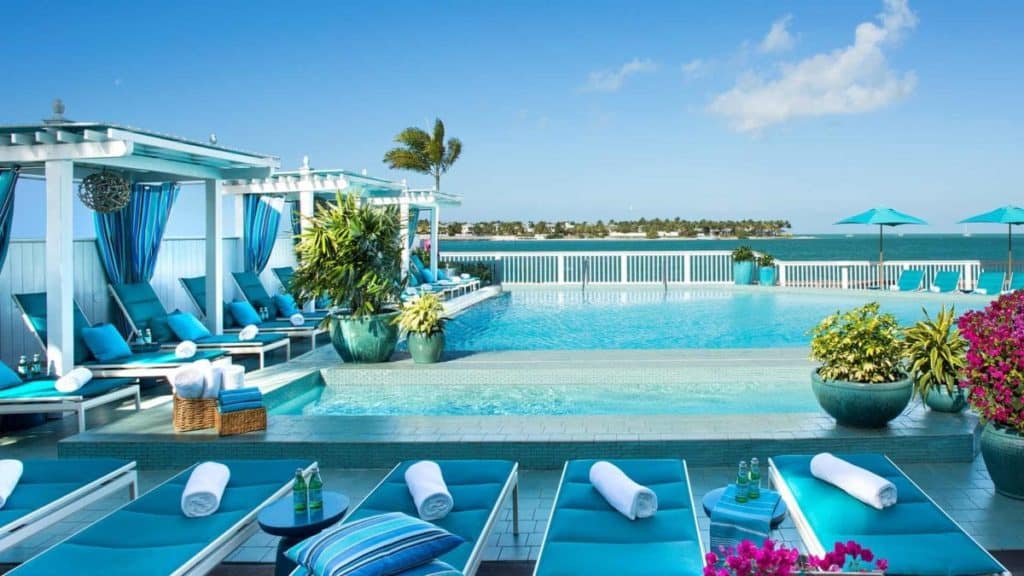
Mastering the selection and execution of luxury team retreats in the USA requires a fundamental rejection of the “Aesthetic Bias.” A common misunderstanding among planners is that a high price point or a Michelin-starred kitchen naturally produces better strategic outcomes. In reality, luxury in the context of a team retreat is a measure of “Service Invisibility.” It is the ability of the venue and staff to anticipate logistical needs so thoroughly that the participants never have to break their “Strategic Flow” to address discomfort. When leadership asks about the best locations, they are often seeking an environment that validates the importance of the team’s mission through its own excellence.
Multi-perspective understanding involves analyzing the retreat through the “Participant’s Lens” (comfort and recognition), the “Planner’s Lens” (logistical reliability and tech-integration), and the “CFO’s Lens” (fiduciary responsibility and ROI). A primary oversimplification risk is treating the retreat as a “Group Vacation.” While leisure is a component, the structural goal is “Organizational Re-calibration.” If the location prioritizes individual pampering over collective interaction, the social bond will remain fractured despite the high expenditure. Strategic selection involves finding a venue that offers “Flexible Gravitas,” a setting that feels serious enough for deep work but comfortable enough for the “Micro-Interactions” that occur during breaks.
Furthermore, there is a “Cultural Compatibility” risk. The domestic market for luxury team retreats USA is segmented into “Vibe Archetypes.” A Silicon Valley leadership team may find the formal, legacy-driven luxury of a Newport, Rhode Island estate to be stifling, whereas a traditional finance board might find a “Glamping” retreat in Montana to be unprofessional. The risk is not in the quality of the venue, but in the “Dissonance” between the team’s identity and the venue’s atmosphere. Proficient planning requires matching the “Social Register” of the team to the “Operational Register” of the destination.
Deep Contextual Background: The Evolution of the American Offsite
The history of the corporate retreat in the United States reflects the broader evolution of the American labor contract. In the early twentieth century, group gatherings were largely paternalistic. The “Company Picnic” or the “Mountain Lodge” visit was a demonstration of the firm’s benevolence toward its workers. The goal was simple: morale and loyalty. The environment was communal, often rustic, and designed to flatten hierarchies for a single day of shared leisure.
The 1980s and 90s introduced the “Era of Artificial Adversity.” Influenced by military training and experiential education, corporate retreats moved toward the “Ropes Course” and the “Wilderness Survival” model. It was believed that forcing executives to collaborate under physical duress would strip away corporate personas and forge authentic bonds. These were the first true “Retreats” in the sense of withdrawing from the office, but they often lacked the “Luxury” component, prioritizing the “Challenge” over the “Recovery.”
Today, we occupy the “Age of Holistic Optimization.” The modern elite retreat is a convergence of high-stakes strategy, biometric wellness, and cultural immersion. The goal has shifted from “Survival” to “Sustainability.” Executives are now looking for environments that facilitate “Deep Work” while simultaneously addressing the physical and mental toll of high-performance leadership. We have moved from Loyalty-Based Paternalism (1950s) to Adversity-Based Bonding (1990s) to Cognitive and Physical Restoration (2020s). The US market has responded with properties that are essentially “Private High-Performance Laboratories” disguised as luxury hotels.
Conceptual Frameworks and Mental Models
To evaluate a potential location with editorial rigor, leadership should apply frameworks that focus on the “Psychology of Space.”
The “Status Delta” Model
This framework assesses the gap between the participants’ daily lifestyle and the retreat environment. For an incentive-heavy team, the environment must represent a “Step Up” from their usual standards to feel like a reward. For a weary executive team, a “Step Down” into high-end minimalism may actually be more effective. The “Status Delta” must be intentional; if it is too high, it creates an “Alienation Effect”; if it is too low, it feels mundane.
The “Privacy Perimeter” Analysis
This model evaluates a venue by its “Inward-Facing” capacity. A traditional luxury hotel has a “Public Perimeter” (lobby, pool, restaurants) where participants are constantly exposed to other guests. A retreat-optimized venue allows for a “Total Buyout” or has a “Dedicated Annex” that ensures the group’s “Intellectual Privacy.” In high-stakes meetings, the fear of being overheard by competitors or the public is a major inhibitor of candid discussion.
The “Social Propinquity” Loop
Propinquity refers to the physical proximity that facilitates social interaction. A luxury retreat with disconnected rooms and vast distances between amenities has “Low Propinquity,” which can inadvertently isolate team members. A superior layout uses “Nodal Architecture”—centralized lounge areas, shared fire pits, or communal dining—that forces “Casual Collisions,” which are often where the most significant strategic breakthroughs occur.
Key Categories of High-End Retreat Clusters
The United States offers several distinct “Geographical Modalities” for team retreats, each with unique trade-offs.
| Cluster | Primary Appeal | Main Trade-off | Ideal For |
| Southwest High Desert | Silence; Light; Wellness | Aridity; Heat | Creative Strategy; Conflict Resolution |
| Mountain West Peaks | Rugged Luxury; Vitality | Altitude risk; Transit time | High-energy Bonding; Product Sprints |
| Northeast Heritage | Tradition; Gravitas | Formal tone; Weather risk | Board Governance; Legal/Finance |
| Pacific Coastal | Innovation; Nature | Rain/Fog risk; High cost | Tech Leadership; Design Thinking |
| Southeast Islands | Seclusion; Ease | Humidity; “Vacation” vibe | Morale/Incentive; Culture Building |
| Central Texas Hills | Accessibility; Tech-focus | Seasonal heat; Urban sprawl | Rapid Growth Teams; Sales Ops |
Decision Logic: The “Airlift-to-Atrophy” Filter
When choosing between clusters, the planner must calculate the “Total Travel Friction.” If a team spends 10 hours in transit for a 48-hour retreat, the “Mental Atrophy” of travel will consume the first 6 hours of the program. For programs under three days, “Airlift Density” (direct flight availability) should be the primary deciding factor, overriding aesthetic preference.
Detailed Real-World Scenarios
The “Crisis Management” Sequestration
A major firm is facing a public relations disaster and needs to align its senior leaders on a response.
-
The Location: A private, high-security estate in the Hudson Valley, New York.
-
The Logic: Proximity to the NYC hub allows for rapid arrival, but the “Gated Seclusion” prevents media intrusion.
-
Failure Mode: If the venue is too “Open,” the fear of leaks will paralyze the conversation. The “Sequestration” must be both physical and psychological.
The “Post-Merger” Cultural Integration
Two disparate leadership teams from a tech merger need to form a “Unified Front.”
-
The Location: A luxury ranch in Big Sky, Montana.
-
The Decision Point: Choosing a “Neutral Territory” that is culturally alien to both groups. By putting both teams in a high-adventure, “Out-of-Comfort-Zone” environment, the existing corporate identities are temporarily suspended, allowing a new, shared identity to form.
-
Second-Order Effect: Shared physical activities (fly fishing, hiking) create “Side-by-Side” bonding, which is often more effective than “Face-to-Face” confrontation for newly merged teams.
Planning, Cost, and Resource Dynamics
The fiscal reality of luxury team retreats USA is defined by “Total Resource Load,” which extends far beyond the hotel bill.
Direct vs. Indirect Costs
-
Direct: Room rates ($1,200+), charter flights, private catering, AV production, and facilitation fees.
-
Indirect: The “Lost Productivity” of the entire senior leadership team being out of the office. For a mid-cap firm, three days of the C-suite’s time is often worth more than the entire trip budget.
-
The “Complexity Tax”: The internal administrative hours spent by Executive Assistants and HR managers on “Participant Customization” (dietary, transport, room preferences).
Range-Based Budgetary Allocation Table
| Spend Tier | Cost per Person (Daily) | Key Feature | Risk |
| Premium Professional | $1,500 – $2,500 | High-end branded hotel | “Corporate” feel; low privacy |
| Exclusive Boutique | $3,000 – $5,000 | Targeted annex/buyout | Logistical limits for larger groups |
| Elite Seclusion | $7,000 – $15,000+ | Private estate/Full buyout | High “Invisible Labor” for planners |
Tools, Strategies, and Support Systems
Executing a flagship retreat requires a “Procedural Stack” that ensures reliability.
-
Site Inspection “Stress-Tests”: Never book based on photography. A site visit should include a “Tech-Audit” (Wi-Fi bandwidth in every room) and a “Noise Audit” (ambient sound during peak hours).
-
Facilitation Neutrality: Utilizing an external “Neutral Facilitator” who is not part of the corporate hierarchy. This person manages the clock and the “Emotional Temperature,” allowing the leaders to focus on content.
-
The “Pre-read” Protocol: Sending all data and briefing documents 72 hours before arrival. This ensures the retreat is used for “Discussion” rather than “Information Consumption.”
-
Circadian-Aligned F&B: Designing menus that follow the “Energy Cycle” of the day—lighter lunches to avoid the “Post-Meal Slump” and protein-rich breakfasts for cognitive sharpness.
-
Emergency Contingency Planning: A “Secondary Venue” identified within a two-hour radius in case of fire, flood, or labor strike at the primary location.
-
“Choice Minimalism”: Reducing the number of choices participants have to make. Instead of a 10-page menu, provide a curated “Chef’s Table.” Luxury is the “Removal of Decisions.”
Risk Landscape: A Taxonomy of Compounding Failures
The failure of a luxury retreat is rarely due to a single event; it is usually a “Chain Reaction.”
-
The “Status Contagion”: If one senior executive complains about their room or the food, the “Dissatisfaction” can quickly spread through the group, poisoning the morale. This is why “Room Uniformity” is critical in luxury retreats.
-
The “Activity Mismatch”: Forcing a physically diverse group into a high-intensity activity (like steep hiking). Those who struggle feel “Exposed” and “Inadequate,” which is the opposite of the “Psychological Safety” the retreat is supposed to build.
-
The “Unstructured White Space” Risk: Having no downtime. Over-scheduling leads to “Social Fatigue,” whereby on the final evening, participants are too tired to engage in the informal bonding that is the core value of the event.
Governance, Maintenance, and Long-Term Adaptation
A successful retreat strategy is “Cyclical.” It must be reviewed to prevent “Programmatic Stagnation.”
The “Post-Retreat Integration” Phase
The most common failure of luxury team retreats USA is the “Return to Default.” Without a formal integration plan, the ideas generated at the retreat will evaporate within 48 hours of returning to the office.
-
Governance Rule: A “Retreat Outcomes” meeting must be held exactly 7 days after return to assign owners to all “Action Items.”
Adaptation Checklist:
-
Is the “Location Rotation” avoiding fatigue? (e.g., Beach-Mountain-City rotation).
-
Are we auditing the “Airlift Changes” to our favorite hubs?
-
Does the “Venues List” reflect current “Property Health” (avoiding tired/declining assets)?
-
Have we reviewed the “Feedback-to-Spend” ratio for the last three events?
Measurement, Tracking, and Evaluation
ROI in elite retreats is found in “Systemic Velocity.”
-
Leading Indicator: “Pre-Event Participation” The percentage of team members who completed the “Pre-read” and “Pre-survey” on time.
-
Lagging Indicator: “Decision Implementation Rate” How many of the strategic pivots decided at the retreat were actually operationalized within 90 days?
-
Qualitative Signal: “Language Adoption” Do the metaphors or terms created during the retreat start appearing in internal emails and town halls?
Documentation Examples
-
The “Vibe Scorecard”: A post-event survey measuring “Psychological Safety” and “Narrative Clarity” (Did you leave knowing our top 3 priorities?).
-
The “Friction Log”: A record of every logistical failure (e.g., “The mic didn’t work for 5 minutes”) to ensure it is never repeated.
Common Misconceptions
-
“Team building requires games.”
-
Correction: At the executive level, team building happens through “Shared Strategic Work” and “Informal Conversation.” Games often feel patronizing and are counterproductive.
-
-
“The venue is 90% of the success.”
-
Correction: The venue is the “Platform.” The facilitation and the “Emotional Preparation” of the team are the “Software.” Even a 5-star resort can’t save a poorly facilitated meeting.
-
-
“Remote means inaccessible.”
-
Correction: Many of the best luxury team retreats usa are remote by design but have private airstrips or luxury ground transport that makes them more accessible than a congested city hotel.
-
-
“Everyone loves a surprise.”
-
Correction: Executives hate surprises. They want a clear agenda, known packing lists, and a predictable schedule so they can manage their own energy.
-
Ethical and Practical Considerations
In a world of increasing “Social Scrutiny,” the optics of luxury are a factor. Selecting a destination that has a “Regenerative Impact” on its local community—such as a property that employs local artisans or has a net-zero carbon footprint—allows the organization to enjoy high-end seclusion while maintaining its “ESG Integrity.” A luxury experience that feels “Extractivist” can create a subtle, negative emotional undertone that distracts from the strategic mission.
Conclusion
The orchestration of luxury team retreats USA is an exercise in “Environmental Stewardship.” It is the process of finding the perfect “Physical Catalyst” for a specific “Cultural Transformation.” When done with editorial patience and intellectual honesty, these retreats become more than an expense; they become “Foundational Assets” that define the next chapter of the organization’s history. The goal is to move beyond the superficial “Trip” and toward a “Definitive Strategic Event,” one where the setting validates the mission, the logistics disappear into the background, and the team is left with the mental space to do the impossible.