Top Adventure Experiences in America: A Strategic Practitioner’s Guide
The American landscape is a geological and cultural anomaly, offering a breadth of topographical diversity that few other nations can replicate. From the permafrost of the Alaskan interior to the subtropical labyrinth of the Floridian Everglades, the continent serves as a high-stakes laboratory for those seeking physical and psychological challenge. Adventure, in this context, is not merely a leisure activity; it is a sophisticated engagement with environment and endurance. As modern life becomes increasingly digitized and sanitized, the drive to seek out unmediated, high-consequence experiences has transitioned from a niche pursuit to a vital pillar of the human experience.
To categorize the most significant American excursions requires a move away from the “bucket list” mentality that dominates contemporary travel media. A definitive analysis must account for the systemic infrastructure that supports these activities, the National Park Service, the Bureau of Land Management, and the private guiding industry, as well as the shifting cultural definitions of what constitutes a “peak” experience. In an era where many wilderness areas are facing the pressures of over-tourism and climate-driven transformation, the ability to navigate these spaces responsibly and expertly has become a prerequisite for true mastery.
This article serves as a comprehensive strategic framework for understanding the highest-tier outdoor engagements available in the United States. It is designed for the practitioner who values technical depth over aesthetic marketing, and who seeks to understand the mechanics of risk, the logistics of execution, and the philosophical underpinnings of wilderness immersion. By dissecting the structural elements of these environments, we can move beyond the superficial and arrive at a more resilient methodology for exploring the American wild.
Understanding “top adventure experiences in america”
At its core, identifying the top adventure experiences in America requires a multi-perspective lens that weighs technical difficulty, geographical rarity, and the psychological impact of the environment. A common misunderstanding in this space is the conflation of “adventure” with “adrenaline.” While the latter is a fleeting physiological response to perceived danger, the former is a sustained state of problem-solving under duress. True adventure exists at the intersection of a participant’s skill level and the unpredictability of the natural world.
From a logistical perspective, “top” experiences are often defined by their barrier to entry. This barrier is rarely just financial; it is frequently temporal and educational. For example, a mid-winter traverse of the Presidential Range in New Hampshire requires a degree of metabolic management and technical crampon work that far exceeds a standard summer hike. Oversimplification occurs when these experiences are marketed as accessible to everyone, regardless of preparation. This leads to a dangerous “consumerization” of the wild, where participants assume that paying a guiding fee guarantees safety or a summit.
Furthermore, we must account for the shifting baseline of adventure in a post-digital world. The “top” experiences today are increasingly those that provide true silence and signal-blocking environments where the safety net of cellular connectivity is removed. This adds a layer of cognitive risk that was standard a generation ago but has now become a luxury commodity. Understanding these nuances is essential for any participant or organization aiming to facilitate high-utility, high-impact outdoor engagements.
Contextual Evolution: From Frontierism to Modern Guiding
The American relationship with adventure is rooted in the 19th-century ethos of Manifest Destiny and the “Frontier Thesis.” Historically, the wilderness was viewed as an obstacle to be conquered or a resource to be extracted. However, as the physical frontier closed, the cultural value of the wilderness shifted from a site of production to a site of restoration and character-building. The establishment of Yellowstone in 1872 marked a systemic pivot toward preservation, creating a protected landscape that would eventually become the backdrop for modern outdoor pursuits.
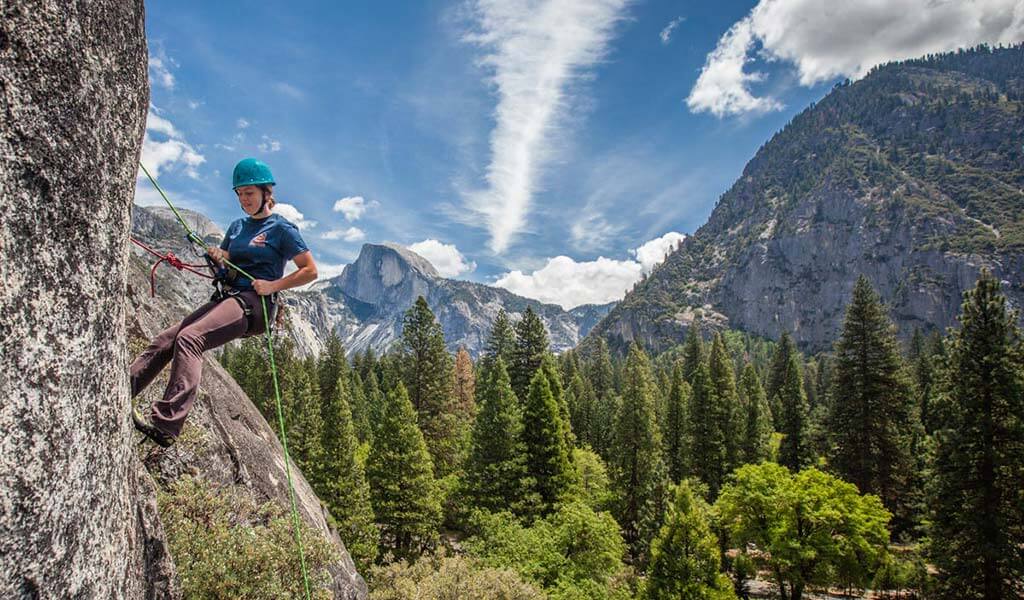
By the mid-20th century, the professionalization of mountain guiding and the advent of lightweight gear democratized access to technical terrain. The “Golden Age” of Yosemite climbing in the 1960s and 70s introduced a new philosophy: the idea that the style of the ascent was as important as the ascent itself. Today, we are in a third wave of evolution, where adventure is being reshaped by environmental ethics and the “Leave No Trace” movement. The modern practitioner is no longer a conqueror but a guest, navigating a landscape that is both more accessible via technology and more vulnerable due to human impact.
Conceptual Frameworks for High-Stakes Travel
To manage a high-tier adventure effectively, participants should utilize structured mental models to evaluate both the terrain and their own capacity.
1. The Challenge-Skill Balance (Flow State)
Derived from positive psychology, this framework suggests that the highest utility in adventure occurs when the difficulty of the task matches the participant’s highest skill level. If the challenge is too high, the result is crippling anxiety; if too low, the result is boredom. A “top” experience keeps the practitioner in the “Flow Channel” through escalating complexity.
2. The Heuristic Trap Model
Used extensively in avalanche safety, this model identifies six human shortcuts that lead to poor decision-making in the wild: Familiarity, Acceptance, Consistency, “Expert” Halo, Social Facilitation, and Scarcity. Understanding these traps is vital for avoiding the cognitive failures that often lead to accidents in high-consequence environments.
3. The Objective vs. Subjective Hazard Framework
In this model, “objective hazards” are environmental factors outside of human control (rockfall, weather, lightning). “Subjective hazards” are internal factors (poor fitness, inadequate gear, ego). Effective risk management involves minimizing subjective hazards to create a buffer for the inevitable objective ones.
Key Categories and Environmental Trade-offs
Adventure in the U.S. is best understood through its distinct biomes, each offering a specific set of technical requirements and logistical constraints.
| Category | Typical Terrain | Technical Mastery Required | Primary Trade-off |
| Alpine Mountaineering | North Cascades, AK Range | Glacial travel, rope work, cold mgmt | High physical suffering; low success rates |
| Technical Canyoneering | Zion, San Rafael Swell | Rappelling, pothole escape, hydrology | Flash flood risk; high gear abrasion |
| Big Wall Climbing | Yosemite, Zion | Aid climbing, hauling, vertical camping | Extreme physical toll; multi-day commitment |
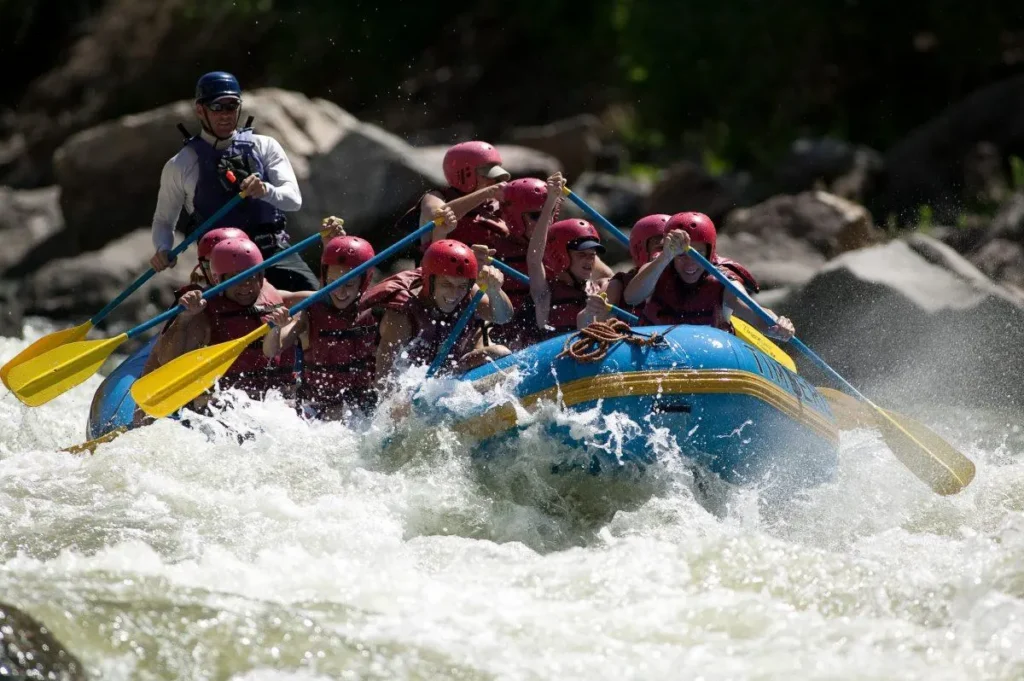
| Long-Distance Paddling | Boundary Waters, Everglades | Navigation, portaging, wildlife mgmt | Constant moisture; mosquito/insect pressure |
| Desert Thru-Hiking | Hayduke Trail, Arizona Trail | Water caching, thermal regulation | High dehydration risk; navigation complexity |
| Deep-Sea/River Kayaking | Grand Canyon, Olympic Coast | Hydrology reading, self-rescue | High consequences of swimming in cold water |
Decision Logic: The “Selection Filter”
When choosing a category, the practitioner must ask: “Is the goal environmental immersion or technical progression?” If the former, low-tech/high-duration activities like thru-hiking are optimal. If the latter, high-tech/low-duration activities like big-wall climbing provide the necessary feedback loop.
Detailed Scenario Analysis: Operational Realities
The Glacial Traverse (Alaska)
A four-person team attempts a traverse of the Ruth Glacier.
-
The Logic: Alaska offers the only true “Himalayan-style” expeditions in the U.S.
-
The Constraint: “Bush pilot” logistics. The team is entirely dependent on weather windows for drop-off and pick-up.
-
Failure Mode: “Crevasse fall” due to improper roping on a high-visibility day (Heuristic Trap: Familiarity).
-
Second-order Effect: The emotional toll of a rescue operation on the guiding community and National Park resources.
The Hayduke Section (Utah/Arizona)
A solo hiker attempts a 100-mile section of the Hayduke Trail in October.
-
The Logic: This is “adventure by navigation”—there is no maintained trail, only a route.
-
The Constraint: Water scarcity. The hiker must manage a 10-liter carry between cached sources.
-
Failure Mode: Flash flood in a narrow slot canyon following a distant storm.
-
Second-order Effect: The dehydration cycle leading to “brain fog” and subsequent navigation errors.
Economics of Adventure: Resource Dynamics
The “cost” of an adventure is rarely just the purchase price of gear. It is a complex tally of direct financial outlay, opportunity cost, and “caloric capital.”
| Expense Category | Low-End (Self-Supported) | High-End (Full Guiding) | Hidden/Indirect Cost |
| Gear/Technical Equipment | $1,500 – $3,000 | $5,000 – $10,000 | Maintenance and “depreciation by use.” |
| Logistics (Permits/Transit) | $200 – $500 | $2,000 – $5,000 | Time spent in “lottery” systems |
| Training/Instruction | $500 (Books/Clinics) | $5,000 (Private Coach) | Opportunity cost of work-hours lost |
| Emergency Buffer | $1,000 (Insurance/SOS) | Included in fees | Long-term physical therapy/recovery |
Caloric Capital: On a high-altitude or high-exertion trip, a participant may burn 5,000–7,000 calories per day. The logistical cost of transporting that much high-density fuel is a significant but often overlooked planning factor.
Support Systems and Specialized Tools
Effective adventure management relies on a hierarchy of support systems that transition from the digital to the analog.
-
Satellite Communication (PLBs): Devices like the Garmin inReach or ACR Bivy Stick have revolutionized solo adventure, allowing for non-emergency communication and precise SOS triggers.
-
Topo-Data Layering: Use of GIS-based mapping (Gaia GPS, CalTopo) to layer slope-angle shading over satellite imagery to identify potential avalanche or rockfall paths.
-
Metabolic Management: The shift toward “fat-adapted” endurance training to reduce dependence on high-glycemic snacks during long pushes.
-
Local Knowledge Networks: Engaging with regional ranger stations and “Peakbagger” forums to identify real-time changes in trail conditions or water levels.
-
Technical Redundancy: The “Rule of Two”—two light sources, two fire starters, two navigation methods.
-
Parametric Weather Forecasting: Moving beyond standard apps to services like Mountain Forecast or NOAA Area Forecast Discussions, which provide nuance on wind shear and lapse rates.
The Risk Landscape: Compounding Failures
In the wild, accidents are rarely caused by a single catastrophic event. Instead, they are the result of an “error chain”—a series of minor mishaps that compound until they exceed the participant’s ability to recover.
The Taxonomy of Compounding Risk
-
Environmental: A sudden temperature drop leads to mild hypothermia.
-
Cognitive: Hypothermia leads to poor decision-making (failure to consult the map).
-
Physical: A navigation error leads to a “benightment” (spending an unplanned night out).
-
Systemic: Exhaustion during the benightment leads to a stumble and a lower-leg injury.
The goal of risk management is to break the chain at the first link. If the temperature drops, the “adventure” move is to stop, put on a shell, and eat—not to “push through.”
Governance, Ethical Stewardship, and Adaptation
As the “Best of America” becomes a global brand, the governance of these spaces has moved toward restrictive permitting. This is a necessary adaptation to protect the “wilderness character” of the landscape.
The Stewardship Checklist
-
Permit Compliance: Respecting the quota systems that prevent soil compaction and water contamination.
-
Waste Management: In high-alpine or desert environments, “Pack It Out” applies to human waste (WAG bags).
-
Indigenous Context: Acknowledging the tribal history of the land and respecting “sacred site” closures (e.g., portions of Devils Tower or the San Francisco Peaks).
-
Climate Adaptation: Recognizing that “traditional” seasons are shifting. Glacier travel in July may now be more dangerous than in May due to early snowmelt and crevasse opening.
Evaluating Success: Beyond the Summit
The metric for a “top” adventure experience should not be the summit photo, but the “margin of safety” maintained throughout.
-
Leading Indicators: Quality of pre-trip training; accuracy of the weather forecast vs. reality; gear readiness.
-
Lagging Indicators: Physical state upon return (avoiding the “over-training” crash); quality of documentation/photos; retention of technical skills.
-
Qualitative Signals: The “Post-Trip Debrief,” did the team communicate effectively under stress? Was the risk level acceptable to the most conservative member of the group?
Common Misconceptions and Oversimplifications
-
Myth: “Newer gear makes adventure safer.”
-
Correction: Gear can foster a “false sense of security” (The Peltzman Effect). High-end shells do not prevent hypothermia if the user is exhausted and wet.
-
-
Myth: “The most famous spots are the best.”
-
Correction: The “Antelope Canyon effect” means famous spots are often crowded, noisy, and highly regulated. True adventure is often found in the “Buffer Zones” around National Parks.
-
-
Myth: “You need to be a professional athlete.”
-
Correction: High-tier adventure is 70% mental management and 30% physical capacity. Discipline and pacing often outperform raw power.
-
-
Myth: “Solo travel is inherently irresponsible.”
-
Correction: Solo travel is a legitimate form of mastery, provided the practitioner has a robust “Fail-Safe” communication plan and understands their own limits without a peer group to check them.
-
Conclusion: The Future of the American Frontier
The American wilderness remains one of the world’s most profound assets, yet its future as a site for “adventure” depends on a collective shift in perspective. As technology continues to close the gaps in our knowledge, the “top” experiences will be those that prioritize uncertainty and the preservation of the unknown. True adventure in America is not a product to be purchased, but a relationship to be cultivated—one built on a foundation of technical respect, environmental ethics, and psychological honesty.
The frontier is no longer a physical line on a map; it is a mental state achieved when one steps beyond the comfort of the digital safety net. For those willing to invest the time, the caloric capital, and the cognitive effort, the American landscape continues to offer a scale of experience that is both humbling and transformative. The challenge is not simply to survive the wild, but to return from it with a deeper understanding of the systems that sustain both the land and ourselves.