Best Ranch Experiences United States: A Strategic Pillar Guide
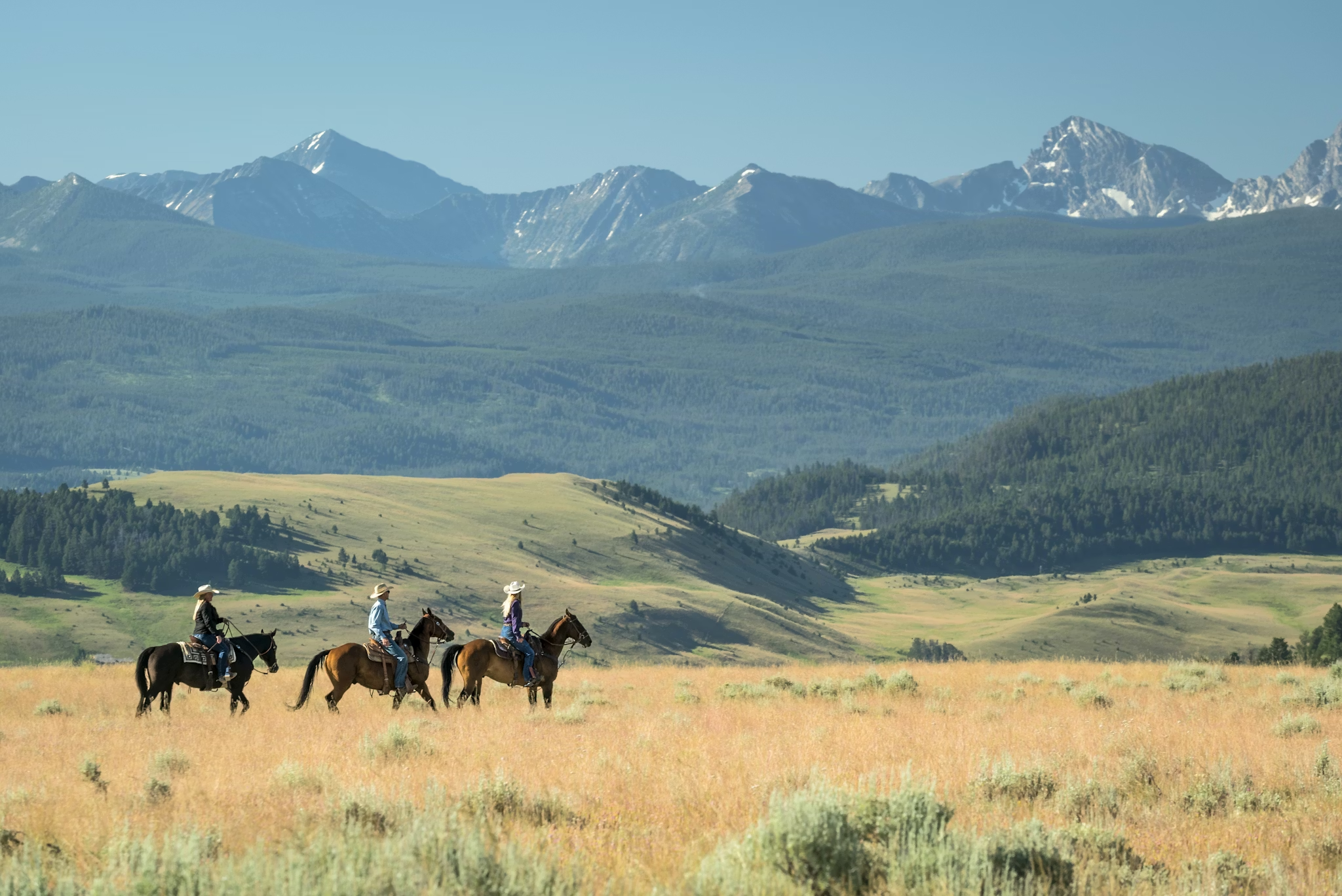
The American West is not merely a geographic coordinate; it is a repository of a specific type of cultural and environmental heritage that is uniquely preserved through the institution of the ranch. While much of the modern landscape has been subsumed by the horizontal sprawl of suburban development, the great American ranches remain as high-utility preserves of topography and tradition. For the participant seeking a “stay” in these environments, the choice is not just between different levels of luxury, but between different modes of engagement with the land, ranging from the high-octane labor of a working cattle operation to the curated repose of a luxury guest enclave.
Selecting among the best ranch experiences in the United States requires an understanding of the “Built-to-Wild” ratio. A ranch is a complex machine designed to manage vast tracts of land, and guest hospitality is often an overlay on this primary function. The transition from a “dude” ranch, a term originally used in the 1880s for urbanites seeking adventure, to the modern ultra-luxury estate reflects a sophisticated evolution in American travel. We have moved from the “sanatorium” model of the early 20th century to a contemporary model of “experiential stewardship,” where the guest’s presence directly funds the conservation of the landscape.
This analysis aims to deconstruct the ranch experience into its constituent parts: the economic drivers, the logistical constraints, and the psychological rewards. By treating these destinations as strategic assets for recovery and reconnection, we can arrive at a more rigorous methodology for evaluating which properties offer genuine depth versus those that merely provide a western-themed veneer. We will explore the systemic factors from water rights and grazing rotation to the engineering of high-altitude comfort that define the pinnacle of Western hospitality.
Understanding “best ranch experiences united states.”
To categorize a destination as offering one of the best ranch experiences in the United States requires a multi-perspective analysis that looks beyond the rusticity of the decor. A common misunderstanding in this sector is the conflation of “authenticity” with “discomfort.” In reality, the most authentic ranch experience is one that adheres to the functional realities of the land it occupies. A luxury ranch in the Montana Rockies should operate differently from a desert ranch in Arizona; the former must manage massive thermal shifts and snowpack logistics, while the latter must prioritize water scarcity and shade engineering.
Oversimplification risks often emerge when “ranching” is viewed as a static activity. The best experiences are those that allow for “dynamic participation,” the ability for a guest to scale their level of involvement from passive observation to active cattle work. True luxury in this context is the provision of “expert agency”: giving the guest the tools, the horse, and the guidance to navigate thousands of acres of wilderness safely and with purpose. If a stay feels like a scripted theme park, it fails the authority test.
Finally, we must address the “Threshold of Seclusion.” As the American West faces increased population pressure, the most prestigious ranches are those that have managed to preserve a “buffer zone” of private land. This internal isolation is a critical planning factor. A ranch that borders a high-traffic highway or a growing town may offer luxury amenities, but it loses the “neurological quiet” that is the primary psychological product of a true wilderness stay.
Deep Contextual Background: From Frontier Survival to Refined Stewardship
The American ranch experience is a direct descendant of the late 19th-century “Eaton Model.” In 1879, the Eaton brothers established a cattle ranch in the Dakota Badlands and began hosting friends from the East. When the cost of hospitality became unsustainable, they set the precedent of charging for room and board, effectively birthing the “dude ranch” industry. This was a response to a specific systemic need: the urban elite of the industrial era required a physical and spiritual antidote to the pollution and density of the coastal cities.
Post-1920s, with the decline of the cattle market, many ranches utilized guest hospitality as a financial bridge to preserve their land from subdivision. This “Tourism-as-Conservation” model remains the backbone of the industry today. In the 21st century, we are witnessing a third wave of evolution: the “Luxury Ecological” phase. Properties like The Ranch at Rock Creek or Brush Creek Ranch have integrated five-star service with aggressive land management, using guest revenue to fund habitat restoration and wildlife migration corridors. The “stay” is no longer just a holiday; it is a contribution to the resilience of the American biome.
Conceptual Frameworks for Ranch Evaluation
To look past the marketing photography, travelers should apply these mental models when selecting a ranch.
1. The Horse-to-Human Synchrony (HHS)
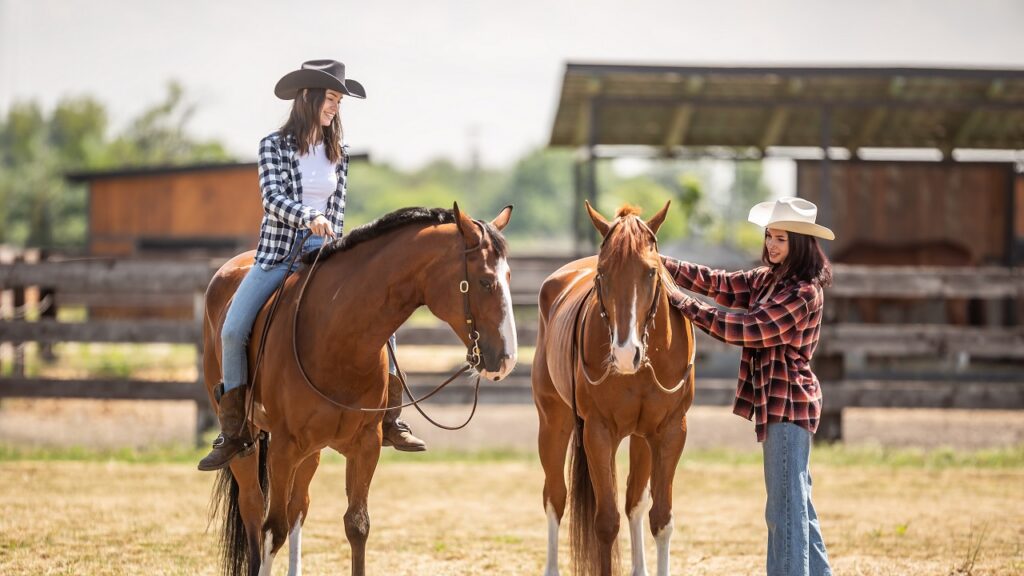
This framework evaluates a ranch based on its “equine infrastructure.” A high-tier ranch manages its herd as a strategic asset, matching horses to guest temperaments with clinical precision. If the horses are treated as “trail-ride machines” rather than individual partners, the experience lacks depth. The HHS model prioritizes properties that offer professional-grade tack, diverse terrain, and instruction that moves beyond the basic “nose-to-tail” format.
2. The Acreage-per-Guest Ratio (APG)
Luxury is inversely proportional to density. A high APG (1,000+ acres per guest) ensures that the participant never experiences the “social crowding” typical of resorts. This ratio is a leading indicator of the “Wilderness Integrity” of the stay.
3. The “Unbuilt” Value Model
This model asks: “How much of the experience depends on what the ranch didn’t build?” In the West, the greatest luxury is the absence of light pollution, the lack of cell service in the backcountry (intentional disconnection), and the preservation of natural waterways. The “Unbuilt” value is the primary driver of neurological recovery.
Categories of Ranch Archetypes and Strategic Trade-offs
The American ranch landscape is divided into distinct categories, each offering a different set of rewards and logistical compromises.
| Category | Primary Region | Defining Feature | Strategic Trade-off |
| The Luxury Guest Enclave | MT, WY, CO | 5-star service; diverse activities. | Higher price point; less focus on “labor.” |
| The Working Cattle Ranch | WY, TX, NM | Daily cattle ops; hands-on work. | High physical demand; rustic lodging. |
| The Resort Ranch | AZ, CA | Hotel-style amenities; golf/tennis. | High noise floor; less wilderness depth. |
| The Private Buyout | Various | 100% exclusivity; custom staff. | Complex group logistics; high entry cost. |
| The Eco-Stewardship Ranch | CO, OR | Conservation focus: biology tours. | Academic tone; limited “cowboy” tropes. |
Realistic Decision Logic
The choice of an archetype should follow the “Labor-to-Leisure” Gradient. If the objective is a “Hard Reset” through physical exertion, the Working Cattle Ranch is the logical choice. If the goal is “Strategic Reflection” in a high-comfort environment, the Luxury Guest Enclave provides the necessary sensory buffering.
Operational Scenarios: The Mechanics of the Guest Experience
The “High-Stress” Recovery (The Montana Enclave)
An executive team seeking a “Deep Reset” after a major acquisition.
-
The Logic: Utilizing a 30,000-acre private ranch to remove all urban stimuli.
-
The Pivot: Moving from scheduled board meetings to “moving meetings” on horseback.
-
Failure Mode: Over-scheduling the itinerary, which prevents the “boredom” necessary for creative insight.
The “Multi-Generational” Integration (The Wyoming Guest Ranch)
A family with three generations ranging from age 6 to 75.
-
The Logic: Providing “layered activity”—kids in a naturalist program, parents on a high-alpine ride, grandparents in a fly-fishing lesson.
-
Constraint: Managing the different “stamina ceilings” across the group.
-
Outcome: The shared evening campfire creates a “social anchor” that transcends age gaps.
Planning, Cost, and Resource Dynamics
The economics of a top-tier ranch stay are driven by the “Logistics of Remoteness.”
| Category | Weekly Cost (Per Person) | Value Driver |
| Ultra-Luxury | $8,000 – $15,000+ | All-inclusive private guides, spa, and fine wine. |
| Premium Guest | $4,500 – $7,500 | High-quality horses, private cabins, gourmet food. |
| Authentic Working | $2,500 – $4,000 | Direct participation in ranch chores, basic meals. |
| Off-Season Shoulder | $2,000 – $3,500 | Reduced activity access; quietude focus. |
The Hidden Resource: The “Staff-to-Guest” Ratio. In the best ranch experiences, this ratio is often 2:1 or better. This is necessary because wilderness safety requires constant monitoring. A ranch that cuts costs on personnel is inherently increasing the “risk floor” for its guests.
Tools and Support Systems for the Modern Rancher
-
Topographic Telemetry: Using specialized GPS units that work in “dark zones” to allow guests limited autonomy in the backcountry.
-
Equine Biomechanics: Advanced tack—including custom-fitted saddles—that protects the horse’s back during steep elevation changes.
-
Hydro-Storage Systems: For desert ranches, high-capacity cisterns and solar-pumping systems are the hallmark of luxury utility.
-
Specialized Apparel: Moving beyond denim to high-performance wools and moisture-wicking layers that manage the 40-degree temperature swings of the high desert.
-
Satellite Redundancy: Essential for “Isolated Wilderness” properties where terrestrial cellular service is a liability.
-
Xeriphytic Landscaping: Using native plants to reduce water consumption while maintaining the “Western” aesthetic.
The Risk Landscape: Biologic and Atmospheric Vulnerabilities
Ranching is a high-consequence activity. A luxury experience must account for these systemic risks without alarming the guest.
-
Atmospheric “Flash” Events: In the West, a clear sky can turn into a lightning-intensive storm in 15 minutes. A “top” ranch has a “Call-In” protocol that can extract riders from high ridges rapidly.
-
Biologic Interaction: Dealing with apex predators (bears, mountain lions) and smaller hazards (rattlesnakes). Luxury here is found in the “Expert Buffer” guides who manage the wildlife interface seamlessly.
-
The “Altitude Fatigue” Cycle: Guests arriving from sea level often experience a 30% reduction in cognitive and physical performance during the first 48 hours. Proper “Acclimatization Governance” (hydration and light activity) is critical.
Governance, Maintenance, and Long-Term Adaptation
A great ranch is a “perpetual asset” that requires constant maintenance to prevent the “entropy of the wild.”
The Stewardship Checklist
-
Fencing Integrity: Maintaining miles of “wildlife-friendly” fencing that keeps cattle in but allows elk to pass.
-
Soil Health Audit: Monitoring grazing intensity to prevent the desertification of pastures.
-
Water Rights Governance: Ensuring the ranch’s “senior water rights” are defended against urban encroachment or industrial use.
-
Review Cycles: An annual “Horse Retirement” audit to ensure the herd’s longevity and guest safety.
Measurement and Evaluation: Tracking the Intangible
-
The “Silence Decibel” Floor: Measuring the lack of human-made noise as a metric of exclusivity.
-
The “First-Ride Confidence” Lead: Tracking how quickly a novice guest moves from anxiety to “equine flow.”
-
Bio-Metric Recovery: Using wearables to track the decline in resting heart rate and cortisol levels over a 7-day stay.
Common Misconceptions and Ethical Considerations
-
Myth: “Working ranches are just for cowboys.”
-
Correction: Modern working ranches are highly sophisticated agricultural businesses that welcome diverse professionals seeking “tactile reality.”
-
-
Myth: “You need to be an expert rider.”
-
Correction: The best ranches specialize in “accelerated learning,” taking guests from zero to confident in a controlled wilderness setting.
-
-
Myth: “Ranching is bad for the environment.”
-
Correction: Regenerative ranching is one of the most effective tools we have for carbon sequestration and preserving biodiversity in the West.
-
-
Myth: “A ‘Dude’ ranch is a derogatory term.”
-
Correction: Within the industry, “Dude” is a historical badge of honor representing the specific cultural exchange between the East and the West.
-
Conclusion
The pursuit of the best ranch experiences united states is ultimately a search for “environmental truth.” It is the realization that true luxury is found in the vastness of the horizon and the rhythmic integrity of a working landscape. As our world becomes increasingly digital and confined, the American ranch stands as a vital “Vertical Sanctuary,” a place where the air is thinner, the light is sharper, and the perspective is inherently broader. By understanding the frameworks of acreage, equine synchrony, and ecological stewardship, the discerning traveler can ensure that their time in the West is not just a trip, but a summit of personal and professional renewal.