Luxury Island Getaways USA: The Definitive Strategic Pillar Guide
The concept of insularity in the American context is often overshadowed by the sheer scale of the continental landmass. Yet, the United States possesses a sprawling and diverse archipelago, ranging from the glacial fjords of the Pacific Northwest to the coral atolls of the Florida Keys and the volcanic peaks of the Central Pacific. To seek an island retreat within this territory is to engage with a specific form of “enclave geography,” a deliberate withdrawal from the mainland’s industrial and digital noise into a space governed by tidal rhythms and maritime boundaries. This is not merely a location change; it is a structural shift in how one perceives time and accessibility.
Luxury, when applied to island environments, undergoes a fundamental transformation. On the mainland, luxury is frequently measured by proximity and convenience. On an island, it is redefined by the quality of isolation and the logistical prowess required to maintain a high-tier lifestyle in a remote setting. The “luxury” is found in the architectural resilience that withstands salt-air corrosion, the sophisticated desalination systems that provide pure water, and the exclusive air or sea corridors that ensure privacy. In these settings, the absence of the “mainland crowd” is a primary commodity, bought through the complexities of island logistics.
As we move into an era of heightened environmental consciousness and experiential demand, the American island getaway has evolved from a seasonal pastime into a strategic asset for cognitive restoration. These locales serve as “neurological sanctuaries,” where the “blue mind” effect, a meditative state induced by the proximity of water, is amplified by the physical reality of being surrounded by the ocean. This article provides a rigorous, analytical dissection of the premier island retreats within the United States, examining the systemic, economic, and psychological drivers that define the pinnacle of insular repose.
Understanding “luxury island getaways usa”
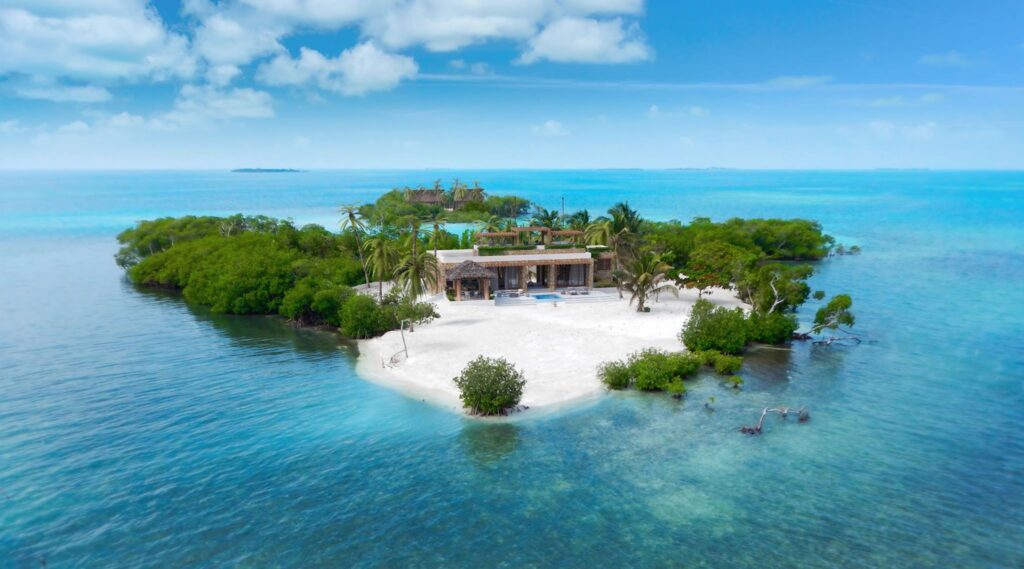
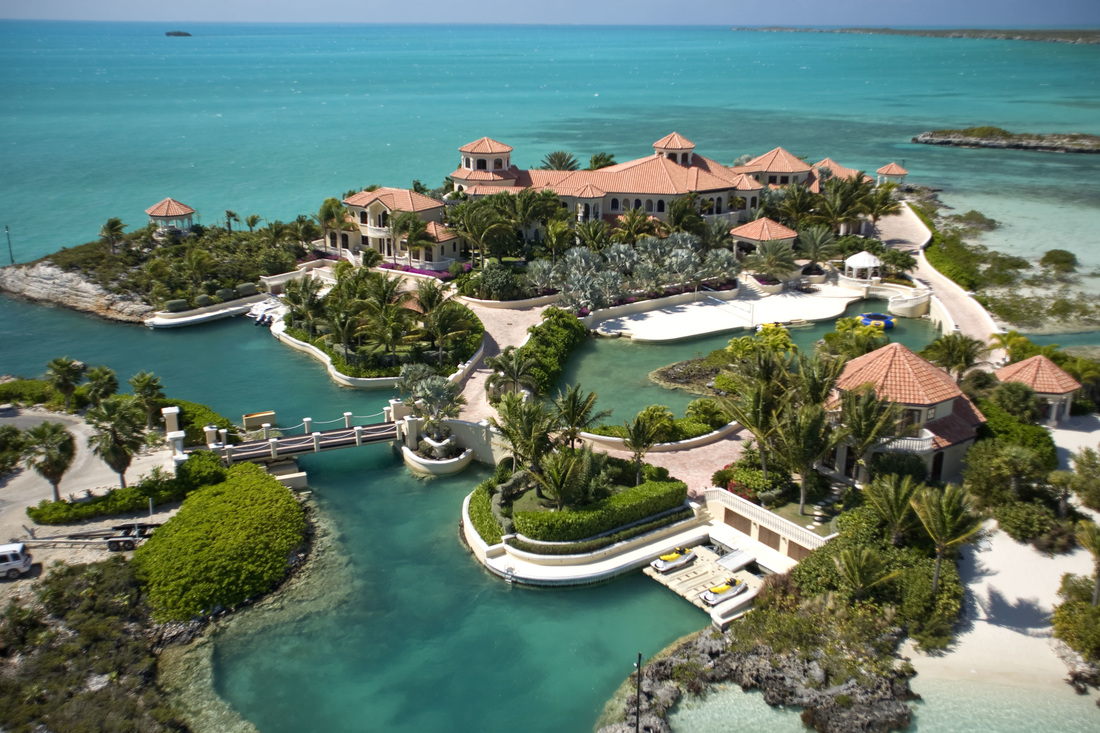
The terminology surrounding luxury island getaways in the USA is frequently diluted by the tourism industry’s penchant for hyperbole, yet for the serious traveler, it represents a precise intersection of sovereignty and geography. A common misunderstanding is the belief that a “luxury” island must be a private one. In reality, some of the most exclusive environments are found on large, inhabited islands such as Maui, Nantucket, or Kiawah, where the luxury exists in the form of “gated enclaves” or private estates that utilize the island’s existing infrastructure while maintaining a strict social buffer.
Oversimplification risks often lead travelers to ignore the “liminality” of the island experience. An island is a closed system with finite resources. From a multi-perspective view, the island is a fragile ecosystem, a logistical challenge, and a psychological fortress. To manage these perspectives, one must recognize that the “best” getaway is the one that aligns its environmental energy with the traveler’s specific need for either “active maritime engagement” (sailing, deep-sea fishing) or “passive insular restoration” (uninterrupted observation and digital silence).
Finally, we must address the “Dependency Paradox.” The very isolation that makes an island desirable also makes it dependent on the mainland for energy, food, and medical support. A true luxury retreat manages this paradox through redundancy. The highest tier of island hospitality involves properties that are “locally autonomous”—possessing their own power grids, organic gardens, and advanced medical protocol,s thereby ensuring that the guest’s experience of isolation is never compromised by the realities of supply chain vulnerability.
Deep Contextual Background: The Evolution of the American Archipelago
The American relationship with its islands has shifted through three distinct historical phases. In the late 19th and early 20th centuries, islands were primarily sites of “industrial maritime” activity or “exclusive summering.” Locations like Jekyll Island, Georgia, were the private preserves of the industrial elite—Rockefellers and Morgans—who sought a social environment that could be strictly policed by the sea. These were “grand cottage” eras, where the architecture was an extension of mainland opulence.
The mid-20th century saw the “Resort Democratization” phase. With the advent of the jet age, the Hawaiian Islands and the Florida Keys became accessible to a broader demographic. This led to the rise of the “Megalithic Resort” massive properties that prioritized volume over exclusivity. However, this model eventually faced “amenity fatigue,” as travelers began to seek more authentic, less commodified environments.
Today, we are in the “Boutique Ecological” phase. The modern luxury island getaway prioritizes “low-impact, high-intensity” experiences. There is a move away from the high-rise hotel and toward the “discrete villa” or the “restored heritage site.” The focus is now on the island’s unique terroir its specific birdlife, its particular tidal patterns, and its historical narrative. This reflects a broader cultural shift from “conspicuous consumption” to “conspicuous conservation,” where the luxury lies in the ability to coexist with a pristine, often volatile, environment.
Conceptual Frameworks for Insular Selection
To navigate the diverse offerings of the American coastlines, one should apply structured mental models to filter for high-utility locations.
1. The Shoreline-to-Center Ratio
This framework evaluates the “depth” of the island experience. Narrow islands (like the Outer Banks or the Florida Keys) offer a high “shoreline-to-center” ratio, meaning the ocean is always present, but privacy is difficult to maintain. Larger islands (like Whidbey or Mount Desert Island) offer an “interior refuge,” where one can experience forests and mountains before returning to the sea.
2. The Logistical “Hop” Count
Luxury is inversely proportional to travel friction. This model calculates the number of “hops” required to reach a destination. A direct flight to a private hangar followed by a 10-minute boat ride is a “Two-Hop” destination—the hallmark of executive-level luxury. A “Four-Hop” destination (commercial flight, puddle-jumper, ferry, shuttle) may be beautiful, but the “recovery time” required upon arrival often depletes the incentive value.
3. The “Blue Mind” Threshold
This psychological framework measures the degree of “aquatic immersion” provided by the stay. It assesses whether the water is merely a visual backdrop or an integrated part of the sensory environment (e.g., the sound of waves in the bedroom, the smell of salt spray on the terrace). The best retreats are those where the “Blue Mind” state is triggered passively, without the need for active excursions.
Key Categories of Island Archetypes and Strategic Trade-offs
American islands can be segmented into distinct archetypes, each with inherent compromises.
| Category | Typical Regions | Core Benefit | Significant Trade-off |
| Volcanic Pacific | Hawaii (Lanai, Maui) | Dramatic topography; tropical flora. | Extreme distance; high tourist density. |
| Temperate Atlantic | Nantucket, Martha’s Vineyard | Historical dignity; intellectual vibe. | Short seasonal window; “preppy” social pressure. |
| Lowcountry Atolls | Georgia/SC Sea Islands | Marshland biodiversity; calm waters. | High humidity; significant insect pressure. |
| Pacific Northwest Fjords | San Juan Islands, Orcas | Rugged isolation; old-growth forests. | Cold water; volatile, grey weather. |
| Coral Keys | Florida Keys | Diving/Fishing access; “Easy” luxury. | Hurricane risk; limited beach quality. |
Realistic Decision Logic
The selection should be driven by the “Thermal Preference Filter.” If the goal is a winter escape, the Coral Keys or Hawaii are the only viable domestic options. If the goal is a summer “cool-down,” the Pacific Northwest or the Temperate Atlantic offer the only natural relief from the mainland heat domes.
Detailed Real-World Scenarios
The “Digital Fortress” (Lanai, Hawaii)
A tech executive seeks 10 days of absolute disconnection. They chose a private-estate-style retreat on the island of Lanai.
-
The Logic: Because the island is largely privately owned, the “buffer zone” around the property is immense.
-
The Environment: Red volcanic soil meeting the deep blue Pacific.
-
Failure Mode: Relying on standard satellite internet can lead to “FOMO” (Fear Of Missing Out). True disconnection requires the intentional use of a “digital valet” to filter urgent communications.
The “Heritage Immersion” (Nantucket, MA)
A family seeks a multi-generational retreat with historical depth.
-
The Logic: Using the island’s strict architectural codes and maritime history to provide an “educational” luxury experience.
-
Second-order Effect: The high density of private sailing clubs provides a social “anchor” for the younger generation.
-
Constraint: The island’s popularity in August can make “insider access” to restaurants and docks a logistical nightmare.
Planning, Cost, and Resource Dynamics
The economics of island getaways are heavily influenced by the “premium of displacement.”
| Resource Type | Direct Cost Range (Daily) | Indirect/Hidden Resource Requirement |
| Premier Villa/Estate | $2,500 – $12,000 | Advanced booking (9-12 months); high security deposit. |
| Aviation/Transport | $500 – $5,000 | Private charter seaplane “buffer” time. |
| Maritime Activity | $1,500 – $4,000 | Professional crew; seasonal weather window tracking. |
| Provisioning | $300 – $800 | Import premiums for mainland-sourced delicacies. |
Opportunity Cost: Choosing a “remote” island (like the San Juans) involves a high “time-to-destination” cost. For a short 3-day weekend, the travel-to-relaxation ratio may be unfavorable compared to a mainland coastal resort.
Tools, Strategies, and Support Systems for Island Navigation
-
Marine Weather Predictive Modeling: Essential for islanders to understand “sea-state” windows for boat transfers.
-
Private Seaplane Networks: The most efficient way to bypass ferry congestion and bridge-traffic in the Atlantic and PNW regions.
-
Local “Island Fixers”: High-tier concierges who have “lived-in” knowledge of the island’s social and logistical undercurrents.
-
Desalination/Solar Redundancy: For private-island or remote-estate stays, ensuring the property has independent water and power.
-
Polarized Marine Optics: Specialized eyewear to mitigate the extreme glare of the sun on open water.
-
Bio-metric Recovery Monitoring: Using wearables to track the impact of “Blue Mind” environments on heart-rate variability (HRV).
The Risk Landscape: Environmental and Systemic Vulnerabilities
The island is the front line of environmental volatility, making it a “high-consequence” choice for travelers.
-
The “Isolation Lock-In”: A storm can ground all flights and sea-craft, turning a 7-day retreat into a 14-day forced stay. A luxury retreat must have a “Provisioning Governance” plan for these events.
-
Coastal Erosion Scrutiny: As sea levels rise, the physical beach of retreat may shrink, leading to a loss of privacy as public use is pushed inland.
-
Medical Extraction Lag: In a remote island setting, the “Golden Hour” for medical emergencies is often impossible to meet without a private helicopter evacuation plan.
Governance, Maintenance, and Long-Term Adaptation
For those who treat luxury island getaways in the USA as a recurring professional or personal asset, a “governance” approach is required.
The Island Integrity Checklist
-
Seasonal Drift Monitoring: Are the “ideal” weather windows shifting (e.g., is the Atlantic hurricane season lengthening)?
-
Supply Chain Audit: How does the island receive its fresh produce? Is it resilient to mainland labor strikes or fuel spikes?
-
Ecological Stewardship Review: Does the retreat support local marine sanctuaries, or is it an extractive “resort bubble”?
-
Adjustment Trigger: If a location experiences two “Category 4” storms in a decade, the retreat strategy should pivot to a higher-latitude or “shielded” island archetype.
Measurement, Tracking, and Evaluation
-
The “Horizon Test”: Can the participant gaze at the unobstructed ocean for 20 minutes without experiencing digital withdrawal?
-
Respiratory Quality Index: A qualitative measure of the perceived “purity” of the sea air compared to the mainland.
-
Social Density Score: A metric of how many “non-program” humans the participant encounters during their stay.
Common Misconceptions and Practical Realities
-
Myth: “Islands are for summer.”
-
Correction: The “shoulder” seasons (September in the North, April in the South) often provide the highest clarity and lowest social density.
-
-
Myth: “Private islands are the only way to get privacy.”
-
Correction: A well-shielded estate on a large island often provides better infrastructure and more varied “escape routes” than a small, resource-poor private atoll.
-
-
Myth: “Island water is always clean.”
-
Correction: Many islands struggle with groundwater contamination; a luxury retreat must be evaluated on the quality of its filtration systems.
-
-
Myth: “Remote means safe.”
-
Correction: Remote islands often have the slowest emergency response times and the most volatile weather changes.
-
Conclusion
The pursuit of luxury island getaways usa is ultimately a search for “geographical sovereignty.” It is the desire to place a physical and psychological barrier between oneself and the demands of the mainland. While the logistics are complex and the environmental risks are real, the reward is a unique form of clarity that only an insular environment can provide. By applying a rigorous, analytical approach to selection, focusing on hop-counts, albedo-thermal balance, and logistical redundancy, the discerning traveler can ensure that their island retreat is not just a vacation, but a definitive milestone of professional and personal restoration.