Corporate Incentive Trip Ideas: The Strategic Pillar Guide for 2026
The architectural design of a modern performance reward system is increasingly centered on the “experiential pivot,” the moment an organization moves from quantitative performance metrics to a qualitative, physical reward. In a professional climate defined by digital saturation and distributed teams, the physical gathering of high-performers is no longer a luxury but a strategic necessity for cultural preservation. The traditional cash bonus has lost some of its comparative utility; while currency is fungible and often disappears into household debt or savings, a curated environment is a unique asset that creates a shared history within a cohort.
The complexity of these programs lies in the tension between individual recovery and group cohesion. A program that over-indexes on high-intensity networking can leave participants physically exhausted, effectively negating the “recharge” intent of the reward. Conversely, a stay that offers total isolation without a shared narrative can fail to reinforce the organizational bonds that justify the expenditure. To navigate this, the modern corporate strategist must view the incentive trip as a high-stakes engineering project, where geography, sociology, and logistics are aligned to produce a specific psychological outcome.
Selecting the right environment involves a deep understanding of cognitive dissonance in travel. If a brand emphasizes sustainability and minimalism but hosts its top achievers in a venue characterized by conspicuous excess, the resulting cultural friction can damage the brand’s internal authority. Therefore, the goal is not simply to find the most expensive destination, but the most resonant one. This analysis examines the systemic frameworks and mechanical details required to produce authoritative performance rewards that survive the scrutiny of both participants and stakeholders.
Understanding “corporate incentive trip ideas.”

When exploring corporate incentive trip ideas, organizations often succumb to destination bias, the tendency to focus on the geographic location before defining the intended behavioral change. From a multi-perspective view, an incentive trip is a financial instrument, a social signal, and a biological intervention. A common misunderstanding is that luxury is the primary driver of satisfaction. In reality, for a high-performing executive who already possesses the means to visit any five-star resort, the true driver is “unbuyable access.” This might mean exclusive use of a historic landmark, a meeting with a global thought leader, or a logistical experience that removes all personal friction.
Oversimplification risks often emerge when planners treat all departments as a monolith. A sales team motivated by competition and high-visibility status will respond poorly to a silent, meditative retreat in the desert. Similarly, an R&D team focused on deep-work and collaboration may find a high-noise, urban “party” environment draining. The core idea behind the trip must be a reflection of the team’s specific psychological profile. This requires an analytical approach to cohort segmentation, ensuring that the environmental energy of the trip matches the energy of the achievement being celebrated.
Furthermore, one must address the threshold of novelty. In a global economy where travel is commodified, the efficacy of a reward depends on its rarity. If an organization repeats the same destination or follows a predictable pattern, the reward becomes a baseline expectation rather than an incentive. To maintain authority, the program must introduce a degree of controlled unpredictability, offering experiences that challenge the participants’ perceptions of their own potential and the company’s ambition.
Deep Contextual Background: The Historical Evolution
The professional incentive trip has its roots in the post-Industrial Revolution “Sanatorium Movement,” where workers were sent to the countryside or coast for physical recovery from industrial grime. In the mid-20th century, this evolved into the “Company Picnic” and eventually the “Sales Convention,” where the goal was primarily pedagogical—education disguised as entertainment. The focus was on the brand, not the participant.
The 1980s and 90s marked the era of “Conspicuous Opulence,” characterized by large-scale hotel takeovers and massive entertainment budgets. Success was measured by the sheer volume of consumption. However, the 2008 financial crisis and the subsequent focus on ESG (Environmental, Social, and Governance) forced a systemic recalibration. We entered the “Experiential Accuracy” phase. Today, the most authoritative programs are those that prioritize intentionality over extravagance. The focus has shifted from “what we are eating” to “where we are going and why it matters to who we are as a company.”
Conceptual Frameworks and Mental Models
To evaluate the utility of any reward concept, strategists should apply structured mental models that look past the marketing photography.
1. The Energy-Return-on-Incentive (EROI)
This model measures the amount of physiological energy a participant must expend to reach and participate in the trip versus the amount of cognitive energy they return with. A trip with high travel friction—multiple flight connections, long ground transfers—requires a significantly higher destination reward to maintain a positive EROI. If the travel is more exhausting than the work it rewards, the incentive fails.
2. The Social Density Gradient
This framework evaluates the trip based on the desired level of peer interaction. High-density urban environments favor networking, competitive spirit, and collective identity. Low-density wilderness environments favor reflection, trust-building, and individual recovery. Selecting the wrong point on this gradient can cause friction within the group.
3. The “Anticipation-to-Memory” Bridge
The value of an incentive trip is not limited to the days on-site. This model views the trip as a three-part asset: the six-month anticipation phase (which drives performance), the four-day execution phase, and the twenty-four-month memory phase (which drives retention). A successful program must have strong hooks in all three stages.
Key Categories and Strategic Trade-offs
Selecting the right archetype is a matter of matching organizational goals with environmental utility.
| Category | Primary Strategic Goal | Core Trade-off | Ideal Cohort |
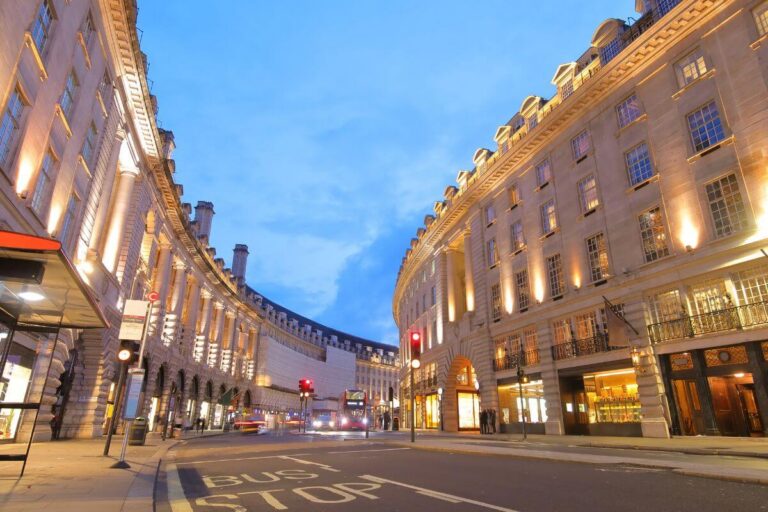
| Urban Immersion | High-energy networking; cultural status. | High noise floor; lack of privacy. | Sales & Marketing |
| Wilderness Enclave | Deep trust-building; cognitive reset. | High travel friction; rustic risks. | Executive Leadership |
| Maritime Buyout | Total privacy; brand immersion. | Limited escape routes; weather risk. | Board-level/Investors |
| High-Alpine Lodge | Vertical isolation; “Awe” factor. | Altitude sickness; logistical complexity. | R&D & Innovation |
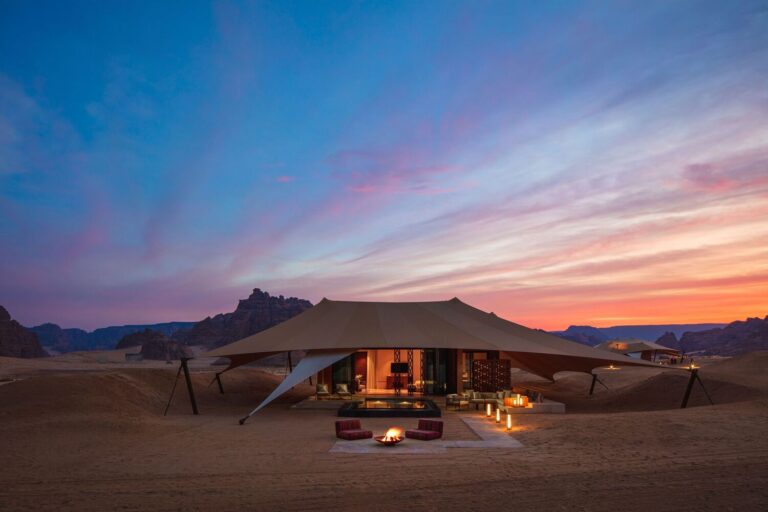
| Desert Oasis | Radical clarity; minimalist focus. | Temperature extremes; water scarcity. | Creative & Strategy |
Realistic Decision Logic
The decision should be driven by the achievement-to-action ratio. If the achievement was a long, grueling marathon of work, the reward should be a Wilderness Enclave for recovery. If the achievement was a sudden, high-intensity victory, the reward should be an Urban Immersion to celebrate the momentum and maintain the high-octane energy of the win.
Detailed Real-World Scenarios
The “Unbuyable” Urban Takeover (New York City)
A fintech firm takes over a historic museum for a private dinner inside a world-famous exhibit, followed by a sunrise private view of the city from a closed observation deck.
-
The Logic: It creates a status spike that participants cannot replicate on their own.
-
The Constraint: Logistics of urban security and catering in non-traditional spaces.
-
Failure Mode: If the event feels like a standard corporate gala, the museum setting is wasted. The experience must feel “wrongly” exclusive.
The “Strategic Seclusion” Ranch (Wyoming)
A 50-person engineering team is moved to a private ranch with zero cell service.
-
The Logic: Forces face-to-face interaction and removes the digital leak that prevents deep bonding.
-
Constraint: Requires a “Digital Valet” system where family emergencies can still reach participants via satellite.
-
Second-order Effect: Participants report a higher quality of thought and decreased cortisol levels post-trip, leading to a spike in patent filings.
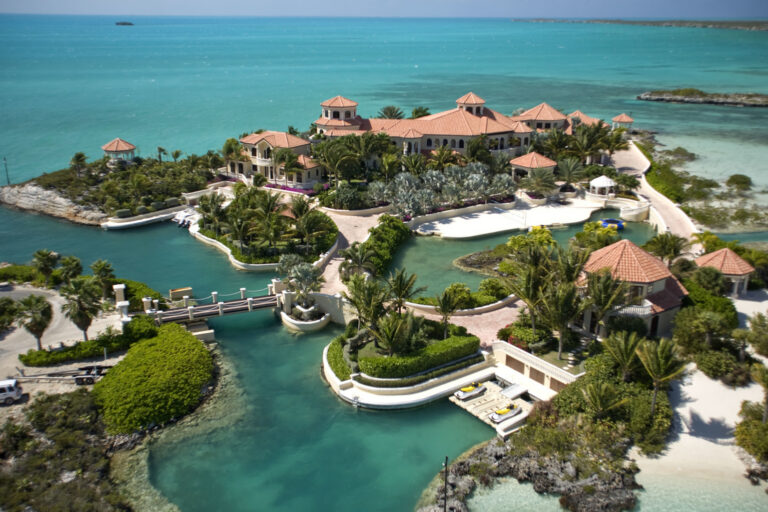
The Maritime Buyout (Florida Keys)
A private island buyout for a small, high-performance executive group.
-
The Logic: Total control over the environment allows for 100% brand immersion in the signage, food, and activities.
-
Failure Mode: If the group dynamics are already fractured, the lack of escape routes can lead to “containment resentment.”
Planning, Cost, and Resource Dynamics
The economics of these programs are often misunderstood by looking only at the per-head cost.
| Expense Category | Percentage of Budget | Hidden/Indirect Cost |
| Lodging & Infrastructure | 35% | Site inspection travel; environmental surcharges. |
| F&B (High-Tier) | 25% | Import duties for remote locations; private chef premiums. |
| Logistics & Air | 20% | Charter cancellation risks; VIP airport handling. |
| Experiential/Insider Access | 20% | Legal/Contractual fees for exclusive venues. |
The Opportunity Cost: The highest cost is the desk-time deficit. Taking 100 top performers out of the market for four days has a measurable impact on short-term output. The trip must be designed to return that value through increased intensity of focus and a reduction in post-trip turnover.
Tools, Strategies, and Support Systems
-
DMC (Destination Management Company): The essential on-the-ground intelligence layer. A DMC acts as the “fixer,” vetting vendors and handling local permits.
-
Private Charter Redundancy: Ensuring back-up transport for remote island or ranch stays where commercial options are nonexistent.
-
Communication Portals: Custom apps to manage dietary needs and scheduling without office-app interference (Slack/Email).
-
Health & Safety Layer: On-site medical personnel for high-altitude or remote wilderness trips where emergency response times are slow.
-
Gift Management: Shipping high-end gear to participants’ homes before the trip to build the “Anticipation Phase” of the EROI model.
-
Sustainability Audits: Tracking the carbon footprint and local economic impact to satisfy modern ESG reporting requirements.
Risk Landscape and Failure Modes
The “top” tier of corporate travel carries unique risks that can compound if not managed.
-
The Tone-Deaf Risk: Launching an expensive trip during a period of cost-cutting or layoffs. This is a systemic failure of governance.
-
Logistical Cascades: A delayed flight leading to a missed boat transfer, which cancels the “keynote” sunset event. The schedule must have “logistical buffers.”
-
Environmental Volatility: A sudden hurricane or wildfire in the destination area without a pre-contracted “Plan B” location.
-
Social Friction: Alcohol-fueled incidents or inappropriate behavior that turn a reward into an HR liability.
Governance and Long-Term Adaptation
Authoritative programs use a three-year review cycle to prevent “Incentive Fatigue.”
-
Year 1: Selection and Execution. Establish the baseline metrics for satisfaction.
-
Year 2: Impact Tracking. Did retention increase for this group? Did their performance sustain or dip?
-
Year 3: Refresh. A location is rarely effective three times in a row. The novelty threshold requires a pivot to a new archetype.
Layered Checklist for Adaptation
-
Is the property maintaining its service standards?
-
Has the political or social climate of the destination changed?
-
Does the vibe of the location still match our current corporate culture?
-
Are the sustainability practices of the vendor still aligned with our ESG goals?
Measurement, Tracking, and Evaluation
-
Leading Indicators: Participant excitement score (pre-trip survey); speed of incentive qualification (how fast earners hit their targets).
-
Lagging Indicators: 12-month retention rate of trip attendees vs. non-attendees; post-trip “Innovation Output.”
-
Qualitative Signal: The “Anecdote Frequency”—how often is the trip mentioned in positive contexts in company meetings six months later?
-
Documentation Example: A “Trip Impact Report” that correlates the $500,000 spend with a $2M reduction in recruitment/onboarding costs due to retained talent.
Common Misconceptions and Oversimplifications
-
Myth: “Everyone wants a beach.”
-
Correction: High-achievers often find passive beach stays boring; they prefer “Active Luxury” that challenges them.
-
Myth: “Activities should be mandatory.”
-
Correction: Mandatory fun is labor. Optional excellence is a reward.
-
Myth: “Standard luxury hotels are enough.”
-
Correction: Standard hotels feel like business travel. Incentives require identity-driven properties.
-
Myth: “The more expensive, the better.”
-
Correction: A $10k per-head trip to a disconnected, poorly chosen site is less effective than a $5k per-head trip to a hyper-resonant, exclusive venue.
Ethical and Contextual Considerations
In 2026, the ethics of travel are paramount. A trip must be regenerative. Does your presence improve the local community, or is it extractive? Choosing destinations that prioritize local hiring and environmental restoration adds a layer of “meaning” that resonates deeply with the modern workforce, particularly younger high-performers who view corporate spending through a moral lens.
Conclusion
The evolution of corporate incentive trip ideas reflects a broader shift toward human-centric management. By treating the trip as a strategic environment rather than a simple vacation, organizations can achieve a profound return on their cultural investment. The goal is to create a physical anchor for the brand, a memory so potent that it serves as a motivator long after the participant has returned to their desk. In the end, the most authoritative incentive is not the one that costs the most, but the one that understands the participant’s need for recovery, recognition, and resonance the best.