
How to Manage Incentive Travel Logistics: A Strategic Pillar Guide
The execution of incentive travel occupies a unique and precarious position within the corporate value chain. Unlike standard business travel, which is primarily functional and cost-centric, or leisure travel, which is subjective and personal, incentive travel is a high-performance validation mechanism. It is a physical manifestation of a company’s appreciation, designed to catalyze future effort by providing an experience that transcends the recipient’s personal purchasing power. When the logistical skeleton of such a program is invisible and seamless, the psychological impact is profound. However, when the mechanics falter, the “reward” quickly dissolves into a source of organizational friction and reputational risk.
Managing these programs requires a departure from traditional hospitality mindsets. We are not merely booking rooms and flights; we are managing the “emotional continuity” of a high-achieving cohort. Every touchpoint from the initial teaser communication to the final post-trip survey must be architected to reinforce a sense of earned exclusivity. This necessitates a level of forensic planning that accounts for geopolitical shifts, health protocols, individualized dietary requirements, and the increasingly complex landscape of global aviation. The strategist behind these events must act as both an architect and an emergency responder, balancing rigid schedules with the flexibility required to handle the unpredictable nature of global movement.
As organizations move toward more distributed and globalized workforces, the complexity of these movements has increased exponentially. A single incentive trip might involve participants departing from thirty different countries, each with varying visa requirements, cultural expectations, and time-zone sensitivities. In this environment, “logistics” is no longer a back-office administrative task; it is a strategic discipline that directly impacts the firm’s ability to retain its most volatile and valuable assets: its top performers. This article provides a definitive exploration of the systemic frameworks required to manage these high-stakes engagements with intellectual and operational rigor.
Understanding “how to manage incentive travel logistics.”
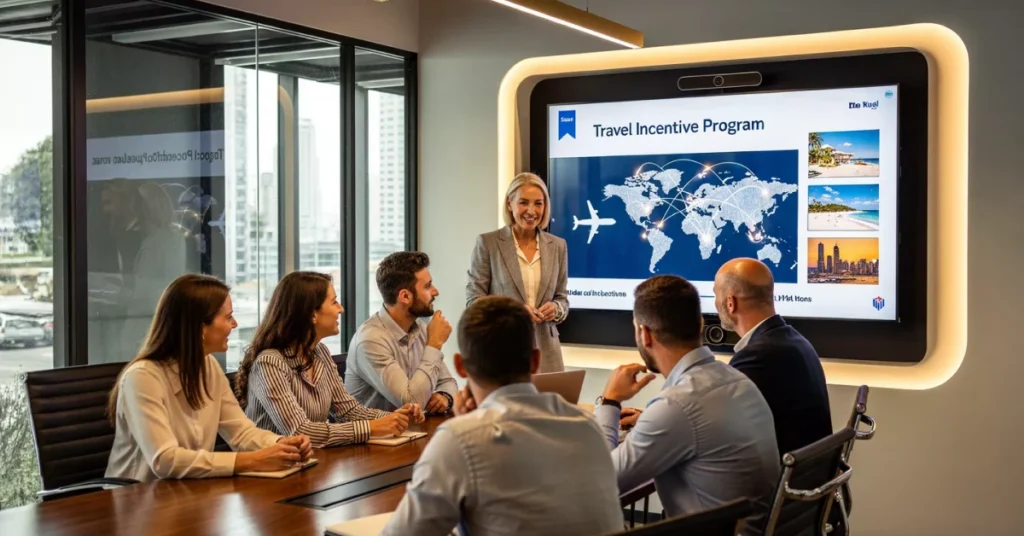
To truly master how to manage incentive travel logistics, one must first acknowledge that logistics is the “silent partner” of the creative vision. A common misunderstanding in the industry is the belief that a compelling destination can overcome poor operational execution. In reality, the more exotic and “aspirational” a destination is, the more fragile the logistical framework becomes. A private dinner in a remote desert location is a powerful motivator, but if the transportation to that site involves unmanaged heat, poor seating, or a lack of communication, the participant’s memory of the event will be defined by the discomfort rather than the sunset.
Multi-perspective management requires looking at the movement through three distinct lenses: the Participant, the Organization, and the Vendor. The Participant views logistics as “invisible care,” and they should never feel the effort required to move them. The Organization views logistics as “risk mitigation and RO, I,” ensuring the capital spent results in a safe, compliant, and impactful event. The Vendor views logistics as “specification adhering,ce” the literal fulfillment of contractual obligations. The strategist’s role is to harmonize these three perspectives, ensuring that the vendor’s technical execution meets the organization’s compliance standards and the participant’s emotional expectations.
Oversimplification in this field often leads to “Template Failure.” This occurs when a manager attempts to apply standard corporate travel policies to an incentive group. Standard travel is built for efficiency and cost-saving; incentive travel is built for “Peak Experience” and “Frictionless Flow.” Managing the logistics for an elite sales team or a group of channel partners requires a different set of vendors, a more flexible budgetary approach, and a significantly higher ratio of staff-to-participants. One does not simply “manage” these trips; one curates the absence of obstacles.
Deep Contextual Background: The Evolution of Managed Rewards
The formalization of incentive travel as a business tool emerged in the mid-20th century, primarily within the American automotive and appliance industries. Early programs were largely transactional: “Sell X number of units, and you go to Miami.” The logistics were rudimentary, often mirroring the mass-market tourism of the era. These were the “Junket Years,” characterized by large, uniform groups and a focus on volume rather than individual experience. The manufacturer held the power, and the travel was seen as a generous, if somewhat generic, gift.
As the global economy matured in the 1980s and 90s, the “Status Signaling” era took hold. Logistics began to favor exclusivity over volume. This was the birth of the “Incentive House” specialized agencies that did more than book tickets; they began to engineer “The Impossible.” Private concerts, closed-door access to historical sites, and the use of supersonic transport (Concorde) became the hallmarks of top-tier programs. Logistics shifted from simple movement to “Narrative Management,” where the journey itself was part of the brand story.
In the current era, we are witnessing the “Customization and Sustainability Shift.” Post-pandemic realities have made participants more sensitive to health, safety, and the environmental impact of their travel. Modern logistical management must now account for carbon offsets, local community engagement, and “Digital Integration.” The participant’s mobile device is now the primary logistical hub, providing real-time updates, personalized agendas, and 24/7 access to support. We have moved from Mass Movement (1950s) to Exclusive Access (1990s) to Hyper-Personalized Navigation (2020s).
Conceptual Frameworks and Mental Models
To achieve operational rigor, leadership should utilize frameworks that transcend basic checklists and address the psychological and systemic nature of movement.
The Friction-to-Reward Ratio
This model posits that every point of friction (a long layover, a confusing check-in, a lack of clear signage) subtracts from the total “Reward Value” of the trip. If the friction exceeds a certain threshold, the trip ceases to be an incentive and becomes a “tax” on the employee’s time. Logistical planning must aim for a “Zero-Friction” target, where the participant never has to make a logistical decision.
The “Invisible Concierge” Model
This mental model suggests that the best logistics are those that are never noticed. It requires “Predictive Planning”—anticipating a need before the participant expresses it. For example, if a flight is delayed, the logistical team should have already rebooked the ground transfer and alerted the hotel before the participant lands, presenting a solution rather than asking for instructions.
The Peak-End Rule in Logistics
As established in behavioral economics, the logistical flow must prioritize the “Peak” (the most intense positive moment) and the “End” (the final departure experience). If the final transport to the airport is disorganized or stressful, it can overwrite three days of perfect experiences. Strategic logistics ensures the “Last Mile” of the trip is the most polished.
Key Categories and Strategic Trade-offs
Managing movement for elite groups involves selecting specific modalities that align with the organizational culture and the complexity of the destination.
| Category | Primary Benefit | Main Trade-off | Ideal Application |
| Bespoke/Individual | Total personalization; high autonomy | High management cost per head | C-Suite; Apex performers |
| Group-Tiered | Shared culture; social bonding | “Least common denominator” logistics | Sales teams; Departmental wins |
| High-Access/Remote | Unique narrative capital; “unbuyable.” | High risk; fragile logistics | Adventure-focused; Young tech firms |
| Hybrid (Work/Play) | High utility; justifying spend | Risk of “Incentive Dilution” | Strategic retreats; Channel partners |
| Wellness/Restorative | Burnout prevention; long-term ROI | Harder to “program” social bonding | High-stress/High-turnover sectors |
| Impact/Philanthropic | Moral alignment; ESG goals | Can feel “preachy” if not authentic | Purpose-driven brands |
Decision Logic: Complexity vs. Control
When determining how to manage incentive travel logistics, the central decision is the degree of control the organization wishes to maintain versus the level of autonomy granted to the participant. For a highly independent sales force, a “Bespoke” model with a “Choice Architecture” (giving them a menu of activities) is often more rewarding than a tightly controlled group itinerary. Conversely, for a newly merged company, a “Group-Tiered” approach is necessary to force the social “collision” required for cultural integration.
Detailed Real-World Scenarios

The “Multi-Node” Global Departure
A global conglomerate is bringing 200 top performers to Japan from 14 different countries.
-
The Constraint: Varying visa requirements and vastly different flight durations.
-
The Logistical Solution: A “Staggered Arrival” strategy where a 24-hour “Hospitality Hub” is established at the destination airport.
-
Second-Order Effect: Early arrivals get restorative spa treatments, while late arrivals get “Express Check-in,” ensuring everyone is at a similar energy level for the first group event.
The “Remote Desert” Gala
An organization wants to host a final dinner in a remote area of AlUla, Saudi Arabia.
-
The Logistical Failure Mode: Relying on local transport that isn’t vetted for Western executive comfort.
-
The Decision Point: Importing a fleet of luxury SUVs and establishing a temporary high-speed satellite internet hub at the site.
-
Result: The participants feel the “thrill” of the remote location without the “anxiety” of being disconnected or uncomfortable.
Planning, Cost, and Resource Dynamics
The economic analysis of travel logistics must account for the “Volatility Premium”—the extra capital required to ensure reliability in an unpredictable global travel market.
Direct vs. Indirect Costs
-
Direct: Airfare, room rates, ground transport, F&B, event production.
-
Indirect: The “Internal Opportunity Cost” of the planning team’s time, and the “Recovery Cost” if a trip fails and talent leaves the organization.
-
The “Hidden Margin”: Often found in the “Force Majeure” clauses and the “Attrition Deadlines” of hotel contracts. Strategic logistics management involves aggressive negotiation of these terms to protect the company’s capital.
Range-Based Resource Allocation
| Expense Tier | Est. % of Budget | Primary Driver | Risk Level |
| Aviation & Transfers | 35% – 45% | Global fuel prices and availability | High (Unpredictable) |
| Lodging & Venue | 25% – 35% | Brand tier; seasonality | Medium (Contractual) |
| Production & Food | 15% – 20% | Level of “Spectacle” | Low (Controlled) |
| Contingency/Safety | 5% – 10% | Geopolitical stability; health | Essential |
Tools, Strategies, and Support Systems
Modern logistical management relies on a “Stack” of technology and human expertise.
-
Specialized PRM (Participant Relationship Management): Beyond simple registration, these tools track flight delays in real-time and push personalized notifications.
-
Manifest Automation: Managing the “Ground Manifest” is the most error-prone part of logistics. Automation that links flight data to transport dispatch is a requirement.
-
Local “Fixers” (DMCs): A Destination Management Company is the critical “on-the-ground” support. They provide the local political and logistical leverage that a remote manager lacks.
-
Security and Medical Vetting: Utilizing firms like International SOS to provide real-time risk assessments and on-site medical support.
-
Duty of Care Dashboards: A centralized view of where every participant is at all times, essential for insurance compliance and crisis management.
-
Sustainability Tracking: Tools that calculate the carbon footprint per participant and automate the purchase of high-quality offsets.
Risk Landscape and Failure Modes
The primary danger in incentive logistics is the “Compounding Delay,” where a single failure in one node of the journey breaks the entire schedule.
-
The “Baggage Black Hole”: On multi-leg international journeys, lost luggage is the number one cause of participant dissatisfaction. How to manage incentive travel logistics effectively involves “Baggage Concierges” who track and retrieve bags without the participant’s involvement.
-
Geopolitical Volatility: A sudden change in visa rules or a local protest can render a destination inaccessible. Logistics must include a “Plan B” destination that is partially contracted and ready for activation.
-
Health and Dietary Inclusivity: In a global cohort, failing to manage complex dietary restrictions (religious, medical, or ethical) is a significant “silent” failure that alienates participants.
-
The “Communication Vacuum”: When things go wrong, the lack of information is often more stressful than the problem itself. Logistical failure is often actually a communication failure.
Governance, Maintenance, and Long-Term Adaptation
Incentive travel logistics should be governed by a “Standard Operating Procedure” (SOP) that is refined after every trip.
-
The “Post-Event Forensic”: Within 14 days of return, the logistical team must meet to document every “Near Miss.” These are points where a failure almost happened but was caught. This data is the primary driver for the next year’s planning.
-
The “Vendor Audit” Cycle: Every three years, the organization should re-vet its primary travel and production partners to ensure they are keeping pace with technological and sustainability standards.
-
Layered Checklist for Adaptation:
-
Are we accounting for the “New Normal” of airline staffing shortages?
-
Does our insurance cover “Civil Unrest” and “Pandemic Extensions”?
-
Have we migrated to “Paperless Logistics” to meet ESG goals?
-
Is the “Communication Tree” updated for the current leadership structure?
-
Measurement, Tracking, and Evaluation
ROI in logistics is measured by the “Silence of the Participant” and the “Efficiency of the Spend.”
-
Leading Indicators: “Registration Speed” and “App Engagement Levels” before the trip begins.
-
Lagging Indicators: “Post-Trip Logistical Satisfaction Score.” This must be separate from the “Destination Satisfaction Score.”
-
Quantitative Signal: “Cost-per-Participant-per-Impact-Hour” measuring how much of the trip was spent in high-value engagement versus transit or wait times.
Documentation Examples
-
The “Logistical Playbook”: A 50+ page document covering every contingency from lost passports to medical evacuations.
-
The “Incident Log”: A real-time record kept during the trip of every deviation from the plan, used for the post-event audit.
Common Misconceptions
-
“Logistics is just booking flights and hotels.”
-
Correction: Logistics is the engineering of an emotional state through the management of physical movement.
-
-
“Technology replaces the need for on-site staff.”
-
Correction: Technology manages the data; humans manage the exceptions. In a crisis, a participant wants a person, not a push notification.
-
-
“Participants want total freedom.”
-
Correction: In an incentive context, participants want “Guided Autonomy.” They want the heavy lifting done for them so they can enjoy the freedom.
-
-
“The cheapest flight is the best for the budget.”
-
Correction: A cheap flight with a 4-hour layover is a “Reward Killer.” The budget should prioritize “Direct and Short” to maximize the participant’s energy at the destination.
-
Conclusion
The successful management of incentive travel logistics is an exercise in “Strategic Stewardship.” It requires a transition from the mindset of an administrator to that of a guardian of the participant’s experience. By acknowledging the fragility of the “Reward State” and building a robust, tech-enabled, and human-centric logistical framework, an organization can ensure that its capital investment translates into genuine cultural and professional momentum. In the high-stakes world of elite performance, the smoothest journey is the one that leaves the deepest impression.