Luxury Incentive Hubs USA: A Definitive Strategic Guide for 2026
The landscape of corporate motivation has undergone a fundamental shift, moving away from simple financial bonuses toward the high-touch, experiential domain of luxury incentive travel. In the United States, this evolution has catalyzed the rise of specific geographic and service-oriented centers that function as more than just destinations. These locales have matured into integrated ecosystems designed to deliver psychological validation, cultural capital, and professional alignment. To understand the current state of these environments, one must look past the superficial glamour of five-star hospitality and examine the underlying mechanics of “incentive architecture.”
A “hub,” in this context, is defined by its ability to provide a seamless synthesis of infrastructure, exclusivity, and narrative depth. In 2026, the demand for such hubs is driven by a workforce that increasingly values “access over ownership” and “experience over utility.” For organizations, the stakes are high: an improperly executed incentive program can result in a “neutral” ROI at best, or a fragmented company culture at worst. Conversely, leveraging the right domestic hubs allows for a reduction in travel friction while maintaining the prestige typically associated with international long-haul destinations.
Understanding “luxury incentive hubs usa”

The terminology surrounding luxury incentive hubs in the USA is often obscured by marketing hyperbole, yet its functional definition is precise. A hub is not merely a city with luxury hotels; it is a destination possessing a “critical mass” of specialized services, DMCs (Destination Management Companies), private aviation access, exclusive venue partnerships, and a high-tier culinary landscape that can support the complex logistics of a corporate “top-performer” group.
One of the most significant oversimplifications in the industry is the belief that “luxury” is a static set of amenities. In the modern incentive context, luxury is a moving target defined by scarcity. As high-end accommodations become more accessible through digital platforms, true incentive hubs must offer “un-googleable” experiences. This might include a private dinner on the floor of the Grand Canyon or a closed-door session with a Silicon Valley visionary.
Deep Contextual Background: The Evolution of Rewards
The systemic evolution of incentive travel in the United States traces back to the mid-20th century “sales contests” of the manufacturing era. Initially, these were all-expenses-paid, blunt instruments to Florida or Hawaii that emphasized relaxation and consumption. By the 1980s and 90s, the “Opulence Era” took hold, characterized by gold-plated amenities and a focus on social signaling.
However, the 2008 financial crisis and the subsequent scrutiny of “corporate junkets” forced a radical pivot. The industry moved toward “meaningful luxury,” where the focus shifted to professional development, wellness, and corporate social responsibility (CSR). In the post-2020 landscape, this has evolved further into the “Authenticity and Access” era.
Conceptual Frameworks and Mental Models
To evaluate a potential hub, planners should utilize specific mental models that go beyond budget and availability.
1. The Scarcity-Access Matrix
This framework evaluates a hub based on two axes: how rare the environment is and how difficult it is for a private individual to replicate the experience.
-
Application: A private ranch in Montana offers high scarcity and great difficulty of access, making it a high-value incentive hub for senior leadership.
2. The Cultural Capital Model
Based on the work of Pierre Bourdieu, this model suggests that the value of an incentive trip lies in the “stories” the employee brings back. Does the hub provide enough unique narrative material to elevate the employee’s status within the organization?
-
Limit: Over-indexing on “cool” factors at the expense of comfort can lead to participant resentment.
3. The Hormetic Stress-Recovery Framework
Derived from biology, this model views an incentive trip as a way to trigger “positive adaptation.” It balances high-intensity activities (hormetic stress) with deep restorative luxury.
-
Application: A Sedona-based hub that offers grueling mountain biking followed by world-class restorative spa treatments.
Key Categories and Regional Variations
The primary luxury incentive hubs usa hosts can be categorized by their “environmental USP” (Unique Selling Proposition). Each category involves specific trade-offs.
| Category | Primary Hubs | Core Value Proposition | Primary Trade-off |
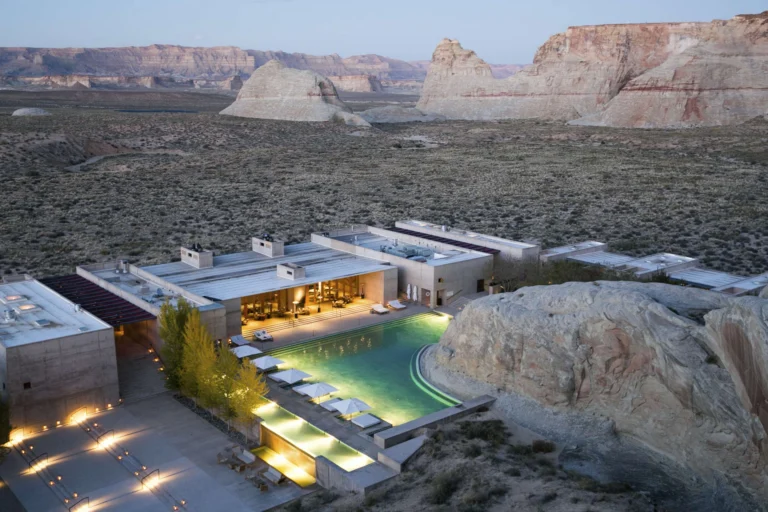
| High-Desert Wellness | Scottsdale, Sedona, Santa Fe | Spiritual reset, red-rock immersion | Seasonal heat risks; high demand |
| Mountain/Wilderness | Aspen, Jackson Hole, Big Sky | Rugged exclusivity, “Old West” luxury | High logistics costs; altitude sickness |
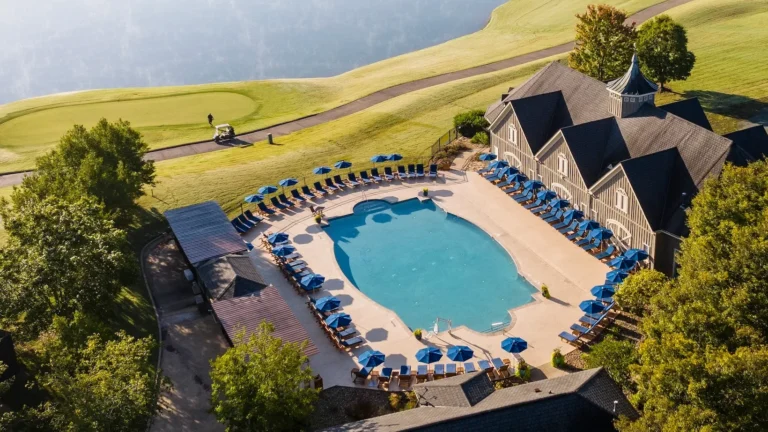
| Coastal/Tropical | Maui, Key West, Sea Island | Tropical decompression, ocean access | Long travel times (Hawaii); hurricane risks |
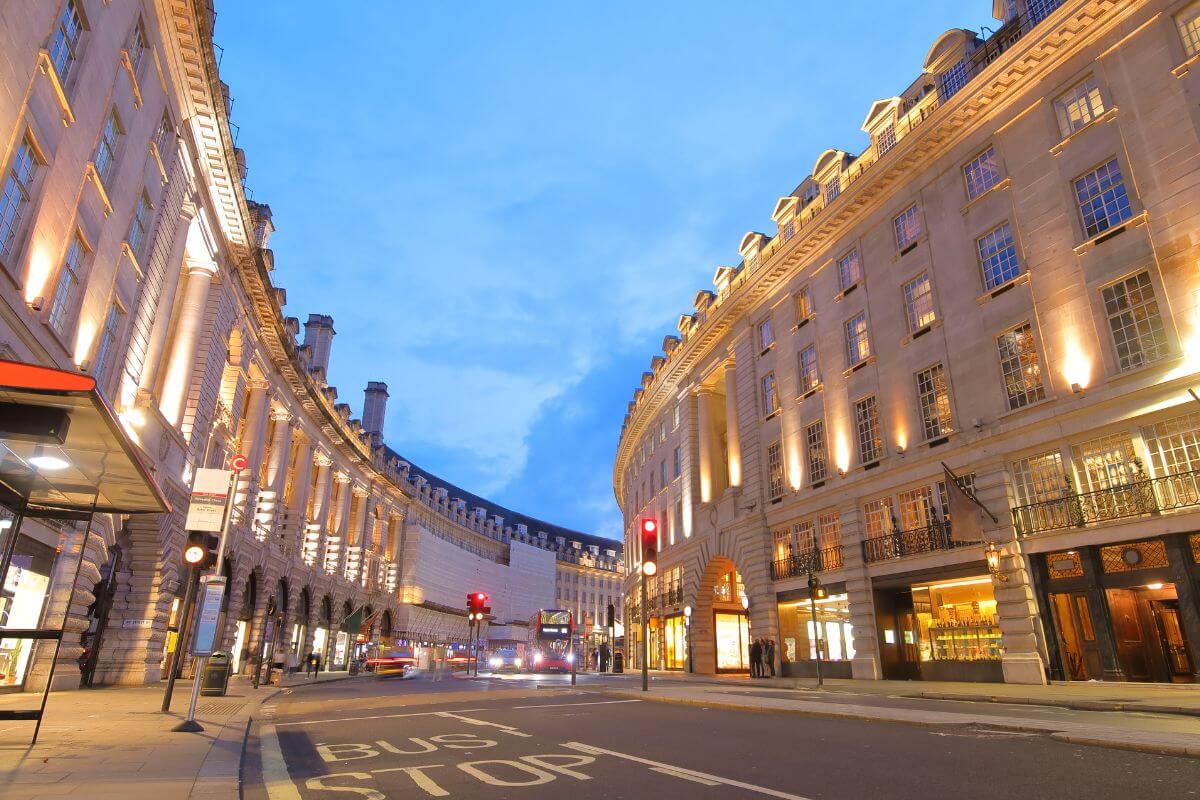
| Urban Power Centers | NYC, Chicago, San Francisco | High-culture access, culinary density | High friction (traffic/noise); lack of “re.se.t” |
| Entertainment/Neon | Las Vegas, Los Ángeles | High-production value, celebrity access | Risk of “distraction”; low cultural depth |
Decision Logic for Hub Selection
The selection of a hub should follow a logical progression:
-
The Demographic Audit: Is the group largely Gen Z (experience/sustainability focused) or Boomer/Gen X (comfort/amenity focused)?
-
The Goal Alignment: Is the trip intended to reward (pure relaxation) or to align (content-heavy/strategic)?
-
The Friction-Prestige Ratio: Does the prestige of a destination like Jackson Hole outweigh the logistical friction of a three-leg flight?
Detailed Real-World Scenarios

The Fintech “Innovation” Retreat
-
The Target: 40 high-performing software engineers and product leads.
-
The Hub: San Francisco/Napa Valley.
-
The Decision Point: Utilizing a hub that allows for “office-adjacent” luxury. The strategy involves a 2-day “hackathon” in a private industrial loft in the Mission District, followed by a 3-day full-buyout of a luxury vineyard estate.
-
Failure Mode: If the Napa portion is too “traditional,” the younger demographic may find it boring. The fix: Integrated high-tech wellness (cryotherapy/IV drips) at the vineyard.
The Insurance “Partnership” Circle
-
The Target: 20 senior partners with 30+ years of tenure.
-
The Hub: Sea Island, Georgia.
-
The Decision Point: High-touch, traditional service with minimal physical friction. The hub must provide seamless golf access and private beach clubs.
-
Second-Order Effect: Long-term loyalty and “legacy” building among the most profitable segment of the company.
The “Post-Merger” Alignment
-
The Target: 200 employees from two recently merged organizations.
-
The Hub: Scottsdale, Arizona.
-
The Decision Point: Choosing a hub with high-capacity infrastructure (large ballrooms) that still feels like a luxury escape.
-
Constraint: Balancing the “we are one team” message with the inherent hierarchy of an incentive trip.
Planning, Cost, and Resource Dynamics
The economics of luxury incentive hubs usa are currently facing inflationary pressures, with airfare and F&B (Food & Beverage) costs rising significantly in 2025-2026.
Range-Based Cost Table (Per Person/4 Nights)
| Expense Category | Mid-Tier Hub ($) | High-Tier Hub ($) | Ultra-Tier Hub ($) |
| Accommodation | 1,800 – 2,400 | 3,500 – 5,000 | 8,000+ |
| Airfare (Domestic) | 400 – 800 | 1,200 – 2,000 (Biz) | 5,000+ (Charter) |
| Activities/Access | 1,000 – 1,500 | 2,500 – 4,000 | 10,000+ |
| F&B/Gala Events | 1,200 – 1,800 | 2,500 – 3,500 | 5,000+ |
| Total Estimated | 4,400 – 6,500 | 9,700 – 14,500 | 28,000+ |
Note: These figures exclude internal program management and marketing overhead.
Tools, Strategies, and Support Systems
Successful execution within these hubs requires a sophisticated support stack.
-
Strategic DMC Partnerships: Local “fixers” who have the relationships to bypass standard booking channels (e.g., getting a private tour of a closed museum).
-
Real-Time Communication Platforms: Utilizing custom apps that provide the guest with their personalized schedule, weather alerts, and “concierge-on-demand” chat features.
-
Behavioral Archetyping: Using pre-trip surveys to categorize attendees into “Explorers,” “Rechargers,” or “Socializers” to tailor activity tracks.
-
Private Aviation Charters: In remote hubs like Jackson Hole or Big Sky, chartering a plane is often a requirement for the “luxury” designation, rather than an option.
Risk Landscape and Failure Modes
The primary risks in luxury incentive hubs USA are rarely related to poor food; they are related to “Narrative Misalignment.”
-
The Entitlement Trap: If an incentive program is too predictable, it becomes viewed as a “right” rather than a “reward,” leading to decreased motivation if the destination doesn’t “level up” each year.
-
Social Polarization: Luxury trips can create friction with the employees who didn’t qualify. High-stakes hubs must be managed with a communication strategy that emphasizes that the “win” belongs to the whole company.
-
Force Majeure Compounding: In hubs like Aspen (snow) or Florida (hurricanes), the lack of a robust “Plan B” venue that maintains the luxury standard is a critical failure point.
-
Health & Security: For ultra-high-profile groups, the “visibility” of an urban hub can be a security risk. Rural hubs offer “natural” security through isolation.
Governance, Maintenance, and Long-Term Adaptation
To ensure a hub remains an effective motivation tool over multiple cycles, organizations must implement a governance framework.
The “Hub Review” Cycle
-
Year 1 (Implementation): Baseline metrics on participant satisfaction and “qualification behavior.”
-
Year 2 (Optimization): Adding “Layered Experiences” (e.g., returning to Scottsdale but adding a private air-tour of the North Rim).
-
Year 3 (Adaptation/Exit): Evaluating if the hub has reached its “Cultural Saturation” point. If participants are no longer excited by the mention of the destination, it is time to rotate.
Measurement, Tracking, and Evaluation
ROI in incentive travel is moving from “Return on Investment” to “Return on Objective” (ROO).
-
Leading Indicators: The number of sales reps hitting 80% of their target earlier in the fiscal year due to the “aspirational pull” of the announced hub.
-
Lagging Indicators: Employee retention rates in the 12 months following the trip, and the “Social Ripple” (LinkedIn engagement, internal referrals).
-
Qualitative Documentation: Professional video captures of the trip should not just be “highlight reels”; they should be used as strategic internal marketing assets for the next year’s contest.
Common Misconceptions and Oversimplifications
-
Myth: “Florida is the most cost-effective hub.” High demand and “resort fees” often make Florida hubs more expensive than less traditional options like Texas Hill Country or the Blue Ridge Mountains.
-
Myth: “You can’t do luxury in a Tier 2 city.” Hubs like Charleston, SC, or Austin, TX often provide more “authentic” luxury than Tier 1 cities like NYC.
-
Myth: “Gen Z doesn’t like traditional luxury.” They do, but they want it to be “purpose-led” and “socially responsible.”
Ethical and Contextual Considerations
The environmental impact of luxury travel is a growing concern. The luxury incentive hubs the USA offers are increasingly moving toward “Regenerative Travel” programs where the group participates in a high-impact local project (e.g., coral reef restoration in Florida) while still enjoying five-star accommodations. This “Dual-Impact” model solves the ethical tension between corporate opulence and social responsibility.
Conclusion: Synthesis and Judgment
The strategic deployment of luxury incentive hubs usa is a masterclass in behavioral economics. These hubs are not just places; they are sophisticated instruments of alignment. By understanding the historical context, utilizing clear conceptual frameworks, and managing the inherent risks of opulence, organizations can turn a “trip” into a permanent cultural asset. In an era of remote work and digital fragmentation, these physical hubs serve as the necessary “connective tissue” that keeps a high-performance organization whole. The ultimate judgment of a hub’s success is not the quality of the caviar, but the intensity of the desire it creates in those who have yet to go.