Top Rewards Destinations in America: A Strategic Guide
The architecture of corporate recognition is undergoing a profound structural shift, moving away from standardized transactional rewards toward highly curated, experiential deployments. Within the North American context, the selection of a destination serves as the primary non-verbal communicator of an organization’s values and its estimation of its workforce. A reward destination is not merely a backdrop for leisure; it is a high-stakes environment where corporate culture is either reinforced or diluted through the quality of the “Spatial Contract” offered to the high-performer.
Selecting from the myriad of domestic possibilities requires an analytical rigor that transcends aesthetic preference. The American landscape offers a unique “Logistical Paradox”: while the infrastructure for high-end travel is arguably the most robust in the world, the “Novelty Threshold” for domestic travelers is exceptionally high. Most elite earners have already traversed major hubs like New York, Las Vegas, or Orlando for personal or business reasons. Therefore, a strategic deployment must rely on “Access-Based Exclusivity,” the ability to provide a version of these locales that is fundamentally unattainable to the retail consumer.
As organizations grapple with the complexities of hybrid work and decentralized team structures, the domestic reward trip has become a primary vehicle for “Cultural Re-synchronization.” The destination acts as a physical manifestation of the organization’s identity. Choosing correctly requires a forensic understanding of attendee demographics, seasonal volatility, and the “Perceptual ROI” of the location. This article provides a comprehensive blueprint for navigating these variables, treating the American reward landscape as a strategic asset rather than a simple line-item expense.
Understanding “top rewards destinations in america”

To master identifying the top reward destinations in America, one must first decouple the “Marketing Gloss” from the “Operational Reality.” A common misunderstanding in the incentive industry is the belief that high-end amenities are synonymous with reward value. In reality, a reward’s efficacy is measured by the “Delta of Experience”—the difference between what a participant expects and what is delivered. A world-class resort in a familiar city may fail to motivate if the participant perceives it as “accessible” on their own terms. Conversely, a less-expensive, highly curated experience in an emerging secondary market can generate significantly higher “Memory Capital.”
Multi-perspective management requires viewing the destination through the “Airlift Lens” (logistical friction), the “Socio-Cultural Lens” (alignment with participant values), and the “Capacity Lens” (the ability to handle group movements without losing the sense of exclusivity). A primary oversimplification risk is the “One-Size-Fits-All” destination. When planners identify the top rewards destinations in America, they often ignore the “Demographic Gravity” of their group. A sales team in their twenties requires a fundamentally different “Social Velocity” than a board of directors in their sixties. Strategic selection involves matching the destination’s “Frequency” to the workforce’s “Rhythm”.
Furthermore, there is a “Political and Social Volatility” component that must be managed. In the current domestic landscape, regional differences in social policy and local governance can inadvertently create “Atmospheric Friction” for certain attendee groups. Assessing the top rewards destinations in America involves a neutral, analytical audit of the local environment to ensure that the destination serves as a “Neutral Sanctuary” where the focus remains on the reward and the organization, rather than external socio-political stressors.
Deep Contextual Background: The Evolution of the American Reward
The concept of the domestic reward trip is rooted in the “Industrial Welfare” programs of the early 20th century. Pioneers like National Cash Register (NCR) or Hershey began providing structured leisure as a means of “Labor Stabilization.” The initial “Rewards” were communal and local—often mountain lodges or coastal sanatoriums where the goal was physical recovery and company loyalty. This was the era of Paternalistic Restoration.
Following the expansion of the interstate highway system and the democratization of flight in the 1950s and 60s, the “Reward” evolved into a status symbol. Florida and California emerged as the primary “Status Hubs,” where the company demonstrated its success by flying employees to climates that were geographically distinct from the industrial North. This established the “Sun-and-Fun” paradigm that still dominates much of the industry’s lower-tier thinking.
Today, we have entered the “Age of Curation and Access.” The high-performer of the 2020s is “Information Rich” and “Time Poor.” They do not need a company to buy them a plane ticket; they need a company to grant them “Insider Status.” We have moved from Communal Recovery (1920s) to Climate Escapism (1960s) to Exclusive Immersion (2020s). The American landscape has adapted by creating “Hyper-Private” enclaves and “Boutique Infrastructure” that allows organizations to provide a level of personalized service that was previously only available in the international luxury market.
Conceptual Frameworks and Mental Models
To evaluate a destination with editorial rigor, leadership should apply frameworks that move beyond simple satisfaction scores.
The “Friction-to-Flavor” Ratio
Every destination has a “Friction Cost” (travel time, jet lag, logistical complexity). The “Flavor” is the uniqueness of the reward. This framework dictates that the “Flavor” must be proportionally higher as the “Friction” increases. A destination like Jackson Hole, which may have higher airlift friction for East Coast participants, must provide a “Flavor” (mountain exclusivity) that is unattainable in closer hubs like the Catskills.
The “Social Currency” Framework
High-performers value rewards that they can “Spend” in their social circles—this is the ability to tell a story or share a visual that signifies high status. A destination has high “Social Currency” if it is perceived as aspirational, hard to book, or “Ahead of the Curve.” Planners must ask: “Will winning this trip make the employee feel more important in their community?”
The “Atmospheric Congruence” Model
This model aligns the destination’s “Brand” with the organization’s “Culture.” A high-energy, disruptive tech firm may find “Congruence” in the urban intensity of Austin or Miami. A legacy wealth management firm may find it in the quiet, historical prestige of Newport or Sea Island. Dissonance occurs when the “Destination Narrative” contradicts the “Corporate Narrative.”
Key Categories of Domestic Reward Hubs
The American reward landscape can be segmented into distinct “Clusters,” each with a specific strategic utility and set of trade-offs.
| Cluster Archetype | Primary Strategic Utility | Main Trade-off | Ideal Demographic |
| Southwest Deserts (Scottsdale, Sedona) | Reliability; Spa/Golf focus | Extreme seasonality; “Corporate” feel | Legacy performers; Mixed-age |
| Mountain West (Aspen, Park City) | Status; Physicality; Adventure | Altitude risks; High price point | High-energy; High-earners |
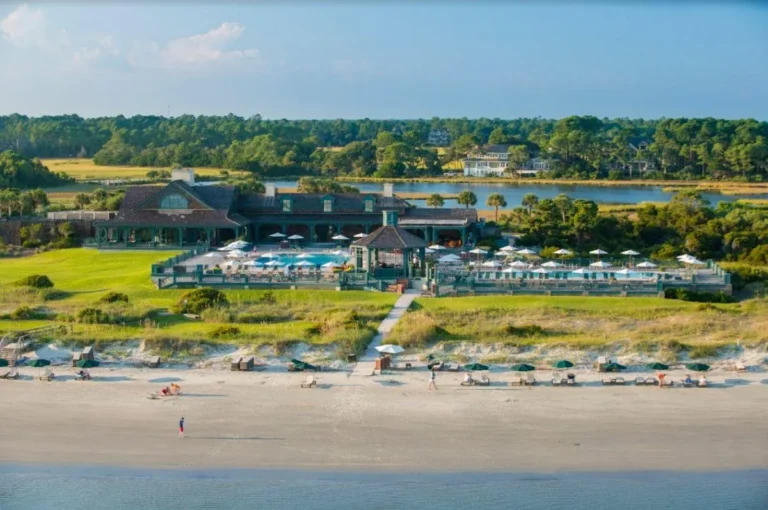
| Coastal Enclaves (Monterey, Kiawah) | Tranquility; Exclusivity | Restricted nightlife; Weather risk | Executive retreats; High-tenure |
| Urban Power Centers (NYC, Chicago) | Access; Culinary; Culture | Logistical noise; Transit friction | Younger cohorts; City-dwellers |
| Emerging “Cool” (Nashville, Austin, Savannah) | Novelty; Storytelling | Capacity limits; Rapidly aging “Newness.” | Creative teams; Mid-level |
| Tropical Domestic (Maui, Puerto Rico) | “International” feel; Escapism | Long airlift; High “Comparison” risk | Sales teams; Family-focused |
Decision Logic: The “Retail vs. Reward” Filter
Before selecting a destination, one must ask: “Can the attendee book this same experience on Expedia?” If the answer is yes, the destination is a “Retail” choice, not a “Reward” choice. A true reward destination requires the addition of a “Value-Add layer,” a private buyout of a local landmark, a meeting with a local luminary, or access to a restricted geographical area.
Detailed Real-World Scenarios
The “Engagement Deficit” Pivot
A traditional insurance company has used Las Vegas for its top 500 agents for 15 years. Engagement scores are flat, and the “top tier” is beginning to skip the event.
-
The Strategic Shift: They pivot to a “Multi-Hub” Mountain West strategy (e.g., Coeur d’Alene or Big Sky).
-
The Logic: They trade the “Volume” and “Spectacle” of Vegas for the “Exclusivity” and “Purity” of the outdoors.
-
Failure Mode: If the transportation from the airport is not handled with “White-Glove” service, the “Remote” nature of the site becomes a source of frustration rather than a reward.
The “Rapid Growth” Urban Immersion
A fintech startup needs to reward a 100-person engineering team. They want “Energy” but also “Connection.”
-
The Location: A buyout of a boutique hotel in the Arts District of Los Angeles or Miami’s Wynwood.
-
The Decision Point: Utilizing an “Urban Campus” model where the city is the activity. No formal bus tours; instead, private access to street-art studios and closed-door culinary workshops.
-
Second-Order Effect: The “Urban Texture” aligns with the brand’s identity as a modern disruptor, reinforcing the “Cool Factor” of the employer.
Planning, Cost, and Resource Dynamics
The economic impact of the top rewards destinations in America is often obscured by the “Direct Spend” (hotel and air). A true audit must account for “Total Program Value.”
Direct vs. Indirect Costs
-
Direct: Room rates, F&B, airport transfers, specialized activities.
-
Indirect: The “Sunk Labor” of the internal planning team, the “Productivity Gap” of having the sales force in transit, and the “Risk Premium” for weather-prone areas.
-
The “Compression” Tax: In popular hubs (like Charleston or Napa), “City-wide Events” can double the cost of ground transportation and off-site dining.
Range-Based Budgetary Allocation Table
| Spend Tier | Est. Cost per Person (4 Days) | Key Value Driver | Best For |
| Value-Focus | $2,000 – $3,500 | Ease of Access; Volume | 500+ attendees |
| Mid-Market | $4,000 – $6,500 | Quality of Brand; Activity Choice | 100–300 attendees |
| Ultra-Luxury | $8,000 – $15,000+ | Total Seclusion; Buyout | Top 25 (Inner Circle) |
Tools, Strategies, and Support Systems
Modern destination management relies on a “Stack” of technical and professional assets to ensure the “Certainty of Delivery.”
-
Site Inspection Scoring Rubrics: Moving beyond “Vibe” to evaluate a property on “Service Resiliency” (e.g., checking the staff-to-guest ratio during a site visit).
-
Airlift Analysis Software: Mapping the “Travel Burden” of the entire attendee list to determine the most equitable hub.
-
DMC (Destination Management Company) Vetting: Local partners who provide the “Access” layer. A reward trip is only as good as the DMC’s ability to “open doors.”
-
Weather Contingency “Shadow Programs”: Having a fully-contracted “Plan B” (e.g., an indoor culinary competition) if the primary outdoor event is rained out.
-
Preference-Engine Surveys: Allowing attendees to “Self-Select” their reward path (e.g., Spa vs. Adventure vs. Culture) within the destination.
-
“Ghost Booking” Tests: Checking if the hotel’s standard service for a retail guest matches the “Promise” made to the corporate group.
Risk Landscape: A Taxonomy of Geographic Failure
A reward trip fails when the “Atmosphere” of the destination conflicts with the “Intent” of the reward.
-
The “Incongruity” Risk: Taking a high-performing sales team to a destination that is currently “in decline” or feels “dated.” This signals to the winners that the company’s fortunes may also be in decline.
-
The “Labor Disruption” Risk: Union strikes or staffing shortages in major domestic hubs can lead to a “Service Collapse” that makes the reward feel like an inconvenience.
-
The “Saturation” Risk: Choosing a destination that is so popular (e.g., Disneyland for families) that the group feels “Lost in the Crowd.” This destroys the “Sense of Importance” that a reward is supposed to foster.
Governance, Maintenance, and Long-Term Adaptation
The management of top rewards destinations in America must be treated as a “Living Portfolio.”
The “Destinations Lifecycle” Audit
Every hub has a lifecycle. A city that was “The Hot Destination” five years ago may now be “Over-exposed” or “Saturated.” Planners must maintain a “Rotation Strategy” that prevents “Predictability Boredom.”
-
Review Cycle: Destinations should be audited every 24 months against “Social Media Sentiment” and “New Infrastructure” (new hotels/venues).
Adaptation Checklist:
-
Is the destination’s “Local Narrative” still fresh?
-
Does the “Airlift” remain efficient for our current employee hubs?
-
Have we reviewed “Post-Trip Surveys” for any “Hidden Frustrations” (e.g., long waits for elevators in large towers)?
-
Is there a “Socially Responsible” component available at this site for modern DEI/ESG goals?
Measurement, Tracking, and Evaluation
The success of a reward destination is measured by its “Motivational Half-life”—how long the positive sentiment lasts after the group returns.
-
Leading Indicator: “Program Enrollment and Hype”—Tracking how many people are checking the leaderboards and talking about the destination before the trip.
-
Lagging Indicator: “Retention of Winners”—The turnover rate of those who qualified for the trip vs. those who did not.
-
Qualitative Signal: “The Watercooler Quote”—Do employees mention specific moments from the trip (e.g., “Remember that private concert in Austin?”) 12 months later?
Documentation Examples
-
The “Reward ROI Dashboard”: A 1-page summary for the CEO showing the cost-per-head vs. the revenue growth of the qualifiers.
-
The “Site Stress-Test” Report: A pre-event document detailing every potential failure point and its mitigation.
Common Misconceptions
-
“Attendees only want Hawaii or Vegas.”
-
Correction: Research shows that “Novelty” and “Personal Growth” are becoming higher motivators than “Climate.” A curated trip to a Montana ranch or a Savannah mansion often out-scores a generic beach resort.
-
-
“Domestic travel is less ‘Special’ than international.”
-
Correction: Domestic travel allows for “Depth.” Without the “Time-Debt” of an international flight, you can spend more of the budget on “High-Access” experiences that feel more exclusive.
-
-
“We need to schedule every minute.”
-
Correction: For high-performers, “Time” is the ultimate luxury. The best programs offer “Structured Choice” with ample “Unscheduled Luxury.”
-
-
“Large hotels are easier.”
-
Correction: Large hotels offer “Safety,” but boutique buyouts offer “Identity.” A 50-room hotel that belongs entirely to your group is a significantly more powerful reward than 50 rooms in a 2,000-room tower.
-
Conclusion
The pursuit of the top rewards destinations in America is an exercise in “Cultural Engineering.” It requires the organization to move beyond the transactional and into the transformational, ensuring that every geographic choice is a deliberate act of brand-building. Whether it is the quiet, rugged luxury of the West or the high-stakes energy of a metropolitan hub, the destination must serve as a “Force Multiplier” for the employee’s achievement. By applying rigorous frameworks, accounting for the “Total Resource Load,” and prioritizing “Access over Opulence,” a firm can ensure that its reward programs remain as competitive and resilient as the workforce they are intended to inspire.