Top Urban Incentives in America: A Strategic Guide to High-Impact Rewards
The modern American city is no longer merely a backdrop for commerce; it is a meticulously engineered environment designed to catalyze human potential. Within the specific sector of performance rewards, urban centers have transitioned from being incidental destinations to becoming high-utility strategic assets. Unlike rural retreats that rely on environmental quietude, the urban landscape operates through “density-driven innovation,” the idea that high concentrations of talent, culture, and infrastructure create a uniquely charged atmosphere for professional validation.
In the current landscape of human capital management, a “stay” in a premier city is a psychological currency. It represents a temporary relocation into a space of high status, offering access to “unbuyable” experiences that are fundamentally tethered to the city’s unique historical and industrial identity. For the organization, the selection of an urban incentive is an exercise in cultural alignment. It is a signal of the company’s sophistication and its commitment to providing its high-performers with a world-class vantage point.
However, the efficacy of an urban incentive is contingent upon the management of “urban friction”—the noise, logistics, and social density that can overwhelm a participant if not properly buffered. To achieve a successful outcome, planners must navigate a complex ecosystem of tiered hospitality, private access, and logistical precision. This analysis provides an authoritative framework for understanding the systemic factors that define the most prestigious urban incentives in the United States, moving beyond travel tropes to explore the mechanics of high-impact professional rewards.
Understanding “top urban incentives in america”
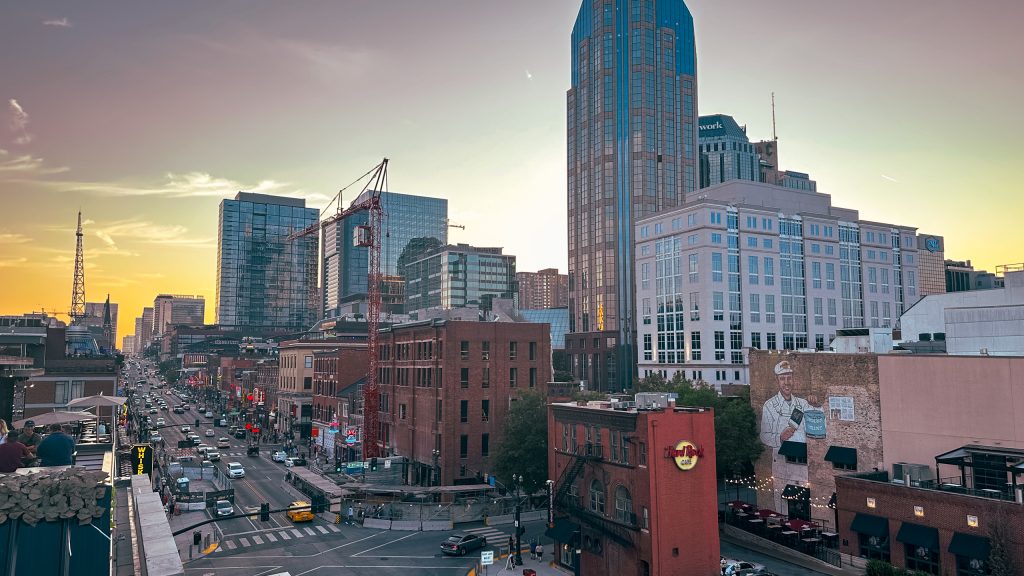
To categorize top urban incentives in America requires a shift from viewing a city as a “place” to viewing it as a “platform.” A common misunderstanding in corporate travel is the belief that luxury is a universal standard. In an urban context, luxury is highly localized. A high-tier stay in New York’s Tribeca operates through a philosophy of “industrial refinement,” while a stay in Miami’s Design District is defined by “multicultural vibrancy.” Failing to recognize these stylistic distinctions can lead to a “misalignment of vibes,” where the reward feels culturally foreign to the participant.
Oversimplification risks also manifest in the handling of “insider access.” For a high-performer who likely already possesses the means for standard luxury travel, a “top” incentive must provide a level of entry that is not publicly available. This might include a private buyout of a Michelin-starred kitchen for a masterclass, an after-hours tour of a Smithsonian archive, or access to a private members’ club that typically requires a residency. In this tier, the incentive’s value is derived from its exclusivity, not its price point.
Finally, we must consider the “Biophilic Gap.” Urban incentives often face the challenge of being “nature-poor.” The most successful urban programs bridge this gap by integrating “green-urbanism”—utilizing rooftop gardens, biophilic architecture, and proximity to major urban parks (like Central Park or the Chicago Lakefront) to provide the neurological benefits of nature within the high-energy context of the city. This creates a balanced environment that supports both high-level social engagement and individual cognitive recovery.
Deep Contextual Background: The Evolution of the Urban Reward
The American urban incentive has evolved through three distinct systemic phases. In the early 20th century, the “Urban Grandee” phase focused on the grand hotels of the Gilded Age, Waldorf Astoria, and The Drake, where the goal was to replicate European aristocratic standards. These stays were formal, rigid, and designed to distance the guest from the “grit” of the city.
The late 20th century ushered in the “Brand Megalith” phase. This was the era of the high-rise convention hotel, where the “incentive” was often a large-scale, standardized experience. While efficient, these programs lacked personality and often felt like an extension of the office.
In the current era, we are witnessing the “Neighborhood Integration” phase. Modern top-tier incentives prioritize boutique, hyper-local properties that act as gateways to specific subcultures. The “stay” is now a curated immersion into a micro-neighborhood. This reflects a broader shift in the workforce toward “experiential capital,” the desire to not just visit a city, but to “inhabit” its most authentic and exclusive layers.
Conceptual Frameworks for Urban Selection
To evaluate a city’s utility as an incentive destination, organizations should apply these structured mental models.
1. The Energy-to-Rest Equilibrium
Urban centers are inherently high-energy. A successful incentive must provide a “calm-center” within that energy. This framework evaluates a property’s “acoustic integrity”—its ability to provide a silent interior environment in a loud city. If a participant cannot achieve deep sleep due to urban noise, the incentive acts as a stressor rather than a reward.
2. The “Insider-to-Tourist” Ratio (ITR)
The ITR measures how much of the itinerary is comprised of publicly accessible “tourist” activities versus “insider” experiences. A “top” incentive should aim for an ITR of at least 70/30. This means 70% of the participants’ time is spent in spaces or events that are not visible to the casual traveler.
3. The Connectivity-vs-Confinement Matrix
This model balances the ease of movement (Connectivity) with the desire for privacy (Confinement). In cities like New York, connectivity is high,h but confinement is difficult. In cities like Austin, private enclaves are easier to secure, but connectivity may rely on congested road networks. The “ideal” urban incentive finds the sweet spot where a participant can move seamlessly between a private sanctuary and a high-energy cultural hub.
Key Categories of Urban Incentive Archetypes
| Category | Typical Regions | Core Benefit | Primary Trade-off |
| The Historic Flagship | NYC, Chicago, Boston | High “Legacy” status; central access. | High foot traffic; formal service. |
| The Tech-Modernist | Austin, Seattle, SF | Innovation energy; seamless tech integration. | Rapidly changing neighborhoods; high “hype” factor. |
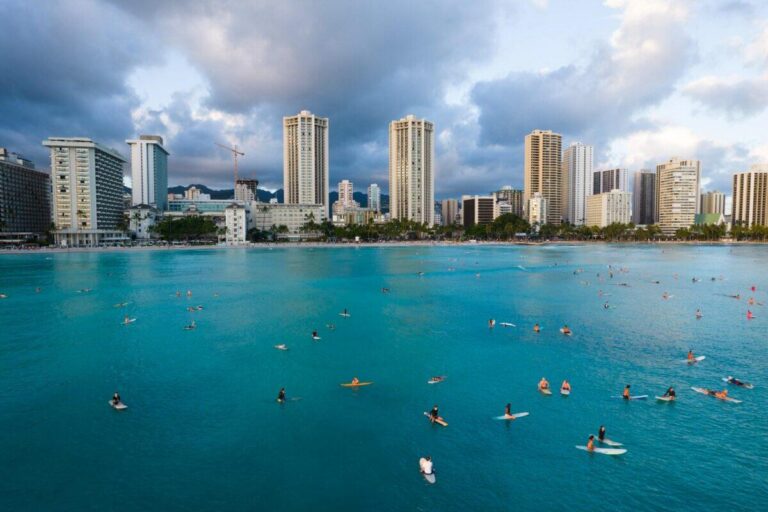
| The Tropical-Urban | Miami, Honolulu | “Blue Mind” benefits + urban culture. | Seasonal climate volatility (hurricanes). |
| The Cultural Boutique | Nashville, New Orleans, Charleston | De, ep authentic storytelling; local intimacy. | Smaller room counts; limited large-group capacity. |
| The Capitol Elite | Washington D.C. | High-power access; historical gravity. | Regulatory/Security complexity. |
Realistic Decision Logic: The “Industry-City” Filter
The choice of an urban incentive should mirror the participant’s industry “aspirations.” A finance team often responds best to the “Legacy” weight of Chicago or Boston. A creative or tech team will find more resonance in the “Emergent” energy of Austin or the Miami Design District.
Detailed Real-World Scenarios
The “Gallery Row” Immersion (NYC)
A luxury fashion brand rewards its top 20 creative directors with a stay in a private loft-style hotel in Chelsea.
-
The Logic: Proximity to the world’s densest concentration of art galleries provides a “creative infusion.”
-
Decision Point: Choosing a property with “rooftop sovereignty”—a private outdoor space for sunset reviews.
-
Failure Mode: Scheduling too many formal meetings, which prevents the participants from “wandering” the gallery district.
The “Silicon Hills” Strategy (Austin)
A high-growth SaaS company hosts its “Chairman’s Club” in a tech-integrated boutique hotel overlooking Lady Bird Lake.
-
The Logic: Aligning the company’s growth trajectory with Austin’s entrepreneurial momentum.
-
Second-order Effect: The proximity to the hike-and-bike trail allows for “moving meetings,” which increases divergent thinking.
-
Constraint: Balancing the “casual” Austin vibe with the high-end expectations of top earners.
Planning, Cost, and Resource Dynamics
Urban incentives are subject to “City-Center Inflation,” where the cost of space is at a premium.
| Spend Category | Cost Range (Per Person/Night) | Value Driver |
| Boutique Lodging | $600 – $1,800 | Neighborhood exclusivity and room size. |
| Private Logistics | $150 – $500 | Black-car redundancy and VIP terminal access. |
| Curated Dining | $250 – $600 | “Chef’s Table” access and private buyouts. |
| Insider Access | $200 – $1,000 | Private gallery openings or backstage tours. |
The Hidden Resource: The “Local Concierge.” In an urban environment, the most valuable resource is a local “fixer” who can navigate restaurant waitlists, secure last-minute theater boxes, and manage the “unpredictability” of city life. This personnel cost is often the difference between a “good” trip and a “legendary” one.
Tools, Strategies, and Support Systems
-
VIP Airport Greeters: Essential in major hubs (JFK, LAX, ORD) to navigate participants through security and to waiting private transport.
-
Private Member Club Reciprocity: Utilizing corporate memberships to provide participants with “home-away-from-home” workspaces and lounges.
-
Real-Time Logistics Apps: Apps that provide participants with updated “walking times” vs “driving times” to manage urban congestion.
-
In-Room Wellness Kits: High-end urban hotels often provide “recovery kits” (sleep masks, white noise machines, hydration salts) to combat city-induced stress.
-
Digital “Neighborhood Guides”: Curated, non-tourist guides provided via a private portal, focusing on “hidden gems” within a 5-block radius.
-
Sustainability Offsets: Urban programs often generate high carbon footprints; “Top” programs utilize local urban-forestry offsets.
Risk Landscape: Urban Vulnerabilities and Failure Modes
-
The “Social Friction” Risk: Urban centers are sites of political and social activity. A protest or parade can shut down the “last mile” of transport to a hotel.
-
The “Noise Floor” Breach: If a property undergoes neighboring construction during the stay, the “luxury” is instantly compromised.
-
Logistical Disconnect: A failure in a city’s transit or ride-share network can lead to participants being “stranded” at a venue, breaking the illusion of frictionless luxury.
Governance, Maintenance, and Long-Term Adaptation
A “pillar” urban incentive program requires a “Lifecycle Governance” approach.
The Urban Adaptation Checklist
-
Neighborhood Vitality Audit: Is the area surrounding the hotel still “exclusive,” or has it become overly commercialized?
-
Infrastructure Review: Has the hotel maintained its tech stack (Wi-Fi 7+, cellular boosters)?
-
Safety & Security Layer: Does the property have a dedicated, low-profile security detail for high-net-worth cohorts?
-
Trigger for Pivot: If a city’s “status” declines in the cultural zeitgeist (e.g., a major industrial shift), the program must pivot to the next “Emergent” hub.
Measurement, Tracking, and Evaluation
-
Leading Indicators: “Pre-trip anticipation” score (via survey); speed of internal contest completion.
-
Lagging Indicators: Post-trip “Brand Sentiment” within the cohort; 6-month retention rate of participants.
-
Qualitative Signal: “The Instagrammability vs. The Intimacy.” Does the participant share the “public” luxury, or do they talk about the “private” moments? The latter indicates a deeper psychological impact.
Common Misconceptions and Practical Realities
-
Myth: “Big cities are too stressful for rewards.”
-
Correction: Only if poorly planned. A well-buffered urban stay provides a unique “vibrancy” that rural areas cannot match.
-
-
Myth: “Standard luxury hotels are enough.”
-
Correction: For top-tier earners, a standard Ritz-Carlton is a “work” hotel. An incentive must feel like a “discovery.”
-
-
Myth: “Urban incentives are cheaper because of infrastructure.”
-
Correction: The “cost of privacy” in a city is often higher than in the wilderness.
-
-
Myth: “You can’t do team-building in a city.”
-
Correction: Urban “scavenger hunts” or group creative projects (like mural painting) are often more engaging than “trust falls” in the woods.
-
Conclusion
The selection and execution of top urban incentives in America is a sophisticated exercise in strategic hospitality. It is the art of harnessing the chaotic energy of the American city and refining it into a curated, frictionless experience for high-impact individuals. As our professional lives become increasingly digital, the “physicality” of the urban reward, the sound of the city, the smell of a high-end lobby, the view from a 60th-floor lounge, becomes a vital anchor for organizational loyalty. By applying the frameworks of density, access, and buffered luxury, organizations can transform a simple city trip into a transformative career milestone.